
Stop Throwing Food Away: What a Beginner Bokashi Bucket Setup Can Do for You
A beginner bokashi bucket setup is one of the fastest, easiest ways to turn all your kitchen scraps — including meat, dairy, and cooked food — into rich garden fertilizer, using nothing more than two nesting buckets, a tight lid, and a sprinkle of bokashi bran.
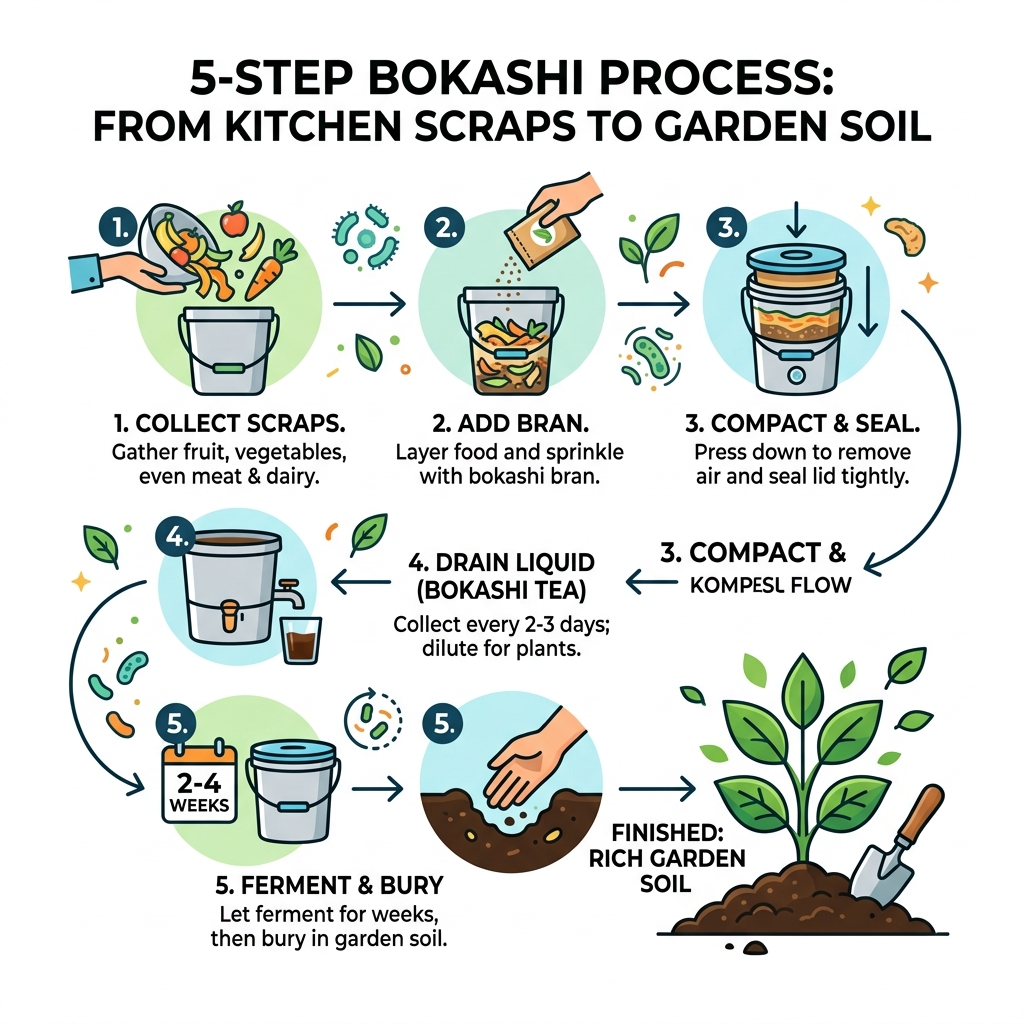
Here’s how it works at a glance:
- Get two food-grade 5-gallon buckets — one with drainage holes nested inside one solid outer bucket
- Add food scraps in layers, sprinkling bokashi bran over each 1–2 inch layer
- Press layers down firmly to remove air pockets, then seal the lid tight
- Drain the liquid (bokashi tea) every 2–3 days through a spigot at the base
- Seal the full bucket for 2–4 weeks to complete fermentation
- Bury the pre-compost in your garden or a soil container to finish breaking down
The average American family throws away around 650 pounds of compostable waste every year. Most of it ends up in landfills, where it releases methane into the atmosphere. That’s a lot of guilt — and a lot of wasted potential.
Bokashi composting flips the script. It’s an anaerobic fermentation process (think pickling, not rotting) that uses beneficial microbes — called Effective Microorganisms — to preserve and transform your scraps. Unlike traditional composting, it works indoors, takes up minimal space, and handles foods most systems can’t touch.
The best part? You don’t need a yard, a big budget, or any composting experience to get started.
Understanding the Beginner Bokashi Bucket Setup
At FinanceZenX, we are always looking for ways to align your personal finances with a sustainable lifestyle. One of the biggest “leaks” in a household budget isn’t just the subscription you forgot to cancel—it’s the literal waste we toss into the bin. When we talk about a beginner bokashi bucket setup, we aren’t just talking about trash; we’re talking about nutrient cycling.
Bokashi is a Japanese term meaning “fermented organic matter.” Unlike traditional composting, which is an aerobic process (meaning it needs oxygen and “breathing” room), bokashi is strictly anaerobic. It relies on a specific group of microbes, primarily lactic acid bacteria (the same kind found in yogurt and sauerkraut), to “pickle” your food scraps.
Because the process happens in a sealed environment, it is virtually odorless when done correctly. This makes it the ultimate apartment-friendly composting solution. You don’t need a massive backyard pile that requires turning with a pitchfork every weekend. Instead, you have a compact system that fits under your kitchen sink.
As noted in Bokashi Composting: A Step By Step Instructional Guide, the science behind this involves homolactic fermentation. The microbes convert the carbohydrates and sugars in your food waste into lactic acid. This drops the pH of the bucket contents to around 4.0, which effectively “locks in” the nutrients and prevents the putrefaction (rotting) that causes bad smells.
| Feature | Bokashi Composting | Traditional Aerobic Composting |
|---|---|---|
| Oxygen Needed? | No (Anaerobic) | Yes (Aerobic) |
| Speed | Very Fast (2-4 weeks) | Slow (3-12 months) |
| Meat & Dairy? | Yes | No |
| Odors | Sweet/Pickly | Can be earthy or foul if wet |
| Space | Tiny (Indoor/Bucket) | Large (Outdoor pile/bin) |
| Result | Fermented “Pre-compost” | Finished Humus |
By choosing a beginner bokashi bucket setup, you’re opting for a system that is forgiving, fast, and incredibly efficient at reducing your environmental footprint while building “wealth” in your soil.
Essential Materials for Your DIY System
One of the core tenets of FinanceZenX is finding ways to achieve high-quality results without the high-end price tag. While you can certainly buy beautiful, pre-made bokashi kits online for $70 or more, we recommend building your own. A DIY setup typically costs between $15 and $37, saving you nearly 50% right out of the gate.
To get started, you will need:
- Two 5-gallon buckets: Ensure they are food-grade plastic. You can often find these for free or cheap at bakeries or grocery stores. They must nest snugly inside one another.
- Airtight Lid: A standard snap-on lid works, but for the best results, we recommend a Gamma Seal lid. These turn a standard bucket into a screw-top container with a heavy-duty gasket, ensuring no oxygen gets in and no smells get out.
- Italian Bottling Spigot: This is a small plastic tap used by homebrewers. It allows you to drain the “bokashi tea” without opening the main lid.
- Bokashi Bran: This is the “magic” ingredient. It consists of a carrier (like wheat bran or rice husks) inoculated with Effective Microorganisms (EM-1).
- Drill and Bits: A standard drill with a 1/8-inch bit for drainage and a 1-inch spade bit for the spigot.
Building your own tools is a fantastic way to practice guide-to-making-reusable-household-items. It gives you the skills to maintain your system for years to come without relying on expensive replacements.
According to How to Make a Bokashi Bucket: Easy DIY Guide (2026), the most critical part of the hardware is the airtight seal. If air leaks in, your fermentation will fail, and you’ll end up with a bucket of rotting trash rather than a bucket of fermented gold.
Preparing the Hardware for Your Beginner Bokashi Bucket Setup
Now, let’s get our hands a little dirty—but not too dirty! Building the bucket takes less than 30 minutes.
Step 1: The Drainage Holes Take your first bucket (the inner one). Use your 1/8-inch drill bit to create 20 to 30 holes in the bottom. These holes allow the liquid byproduct of fermentation to drip through into the second bucket, preventing your food scraps from “drowning” in their own juices.
Step 2: The Spigot Installation Take your second bucket (the outer one). Measure about 1 to 2 inches up from the base. You want enough clearance so the spigot doesn’t hit the floor when the bucket is sitting flat. Use your 1-inch spade bit to drill a hole. Insert the Italian bottling spigot, ensuring the rubber gaskets are on both the inside and outside of the bucket wall. Tighten the nut firmly—but don’t over-tighten, or you might crack the plastic.
Step 3: The Nesting Place the bucket with the holes inside the bucket with the spigot. They should fit together like a glove. If there is a large gap between the bottoms, you might need to place a small spacer (like a plastic yogurt container) in the bottom of the outer bucket to support the weight of the inner one.
Step 4: The Seal Attach your lid to the top bucket. If you’re using a Gamma Seal lid, you’ll snap the adapter ring onto the bucket rim first (use a rubber mallet if it’s stubborn) and then screw the lid on.

Sourcing and Using Bran in Your Beginner Bokashi Bucket Setup
The bokashi bran is the engine of your system. Think of it like the sourdough starter for your trash. Without these microbes, you’re just storing old food in a plastic bin.
The bran usually consists of:
- A Carbon Source: Wheat bran is most common, but rice husks, sawdust, or even spent brewery grains work brilliantly.
- The Microbes: A liquid culture of EM-1 (Effective Microorganisms).
- A Sugar Source: Molasses is typically used to feed the microbes while they are in the bran.
If you are a homebrewer, you can actually repurpose your spent grains into bokashi bran, which is a fantastic way to close the loop on your hobby. For everyone else, we recommend buying a bag of high-quality, pre-made bran for your first few batches. Once you’re comfortable with the process, you can explore zero-waste-kitchen-hacks-that-you-can-diy to learn how to make your own inoculant at home.
When using the bran, the rule of thumb is “when in doubt, add more.” For every inch of food scraps you add, sprinkle a generous handful of bran. If you are adding “high-risk” items like meat, fish, or dairy, double the amount of bran to ensure the fermentation stays on track.
Step-by-Step Guide to Filling Your Bucket
Filling your beginner bokashi bucket setup is a daily ritual that only takes a few seconds.
1. Chop Your Scraps The smaller the pieces, the more surface area for the microbes to attack. Aim for “golf ball” size or smaller. You don’t need to pulverize them, but a whole watermelon rind will take much longer to ferment than one chopped into cubes.
2. Add the Layer Dump your daily scraps into the inner bucket. We recommend keeping a small, lidded container on your counter to collect scraps throughout the day so you only have to open the main bokashi bucket once. This minimizes the amount of oxygen entering the system.
3. Sprinkle the Bran Add about one to two tablespoons of bokashi bran over the layer. Ensure you get good coverage.
4. Compress and Remove Air This is the most important step! Use a potato masher, a heavy plate, or even a piece of cardboard to press the food down firmly. You want to squeeze out as much air as possible. Some people like to leave a heavy plate sitting on top of the scraps inside the bucket to keep them compressed between additions.
5. Seal It Tight Close the lid and ensure it is airtight.
One of the biggest perks of this system is that it handles waste that would normally be “off-limits.” You can include:
- Meat and fish (cooked or raw)
- Small bones
- Cheese and yogurt
- Bread and pasta
- Coffee grounds and tea bags
- Citrus peels and onions (which worms often dislike)
By including these items, you can drastically reduce-household-waste-effectively, often cutting your trash output by 30% or more.
Managing Fermentation and Bokashi Tea
As your food ferments, it will release a liquid known as “bokashi tea” or leachate. This liquid is incredibly concentrated and packed with the same beneficial microbes found in the bucket.
How to Drain It Every 2 to 3 days, open the spigot and drain the liquid into a jar. In the beginning, you might only get a few drops. As the bucket fills—especially if you add watery foods like melon or cucumber—you might get a cup or more.
How to Use It
- Garden Fertilizer: This liquid is very acidic, so you must dilute it before using it on plants. The standard ratio is 1:100 (about 1 teaspoon per 2 cups of water). Use it as a soil drench for your houseplants or garden vegetables. It’s like a probiotic shot for your soil!
- Microbial Drain Cleaner: If you have more tea than you have plants, pour it undiluted down your kitchen or bathroom drains. The microbes will go to work eating the organic sludge and biofilm in your pipes, helping to prevent clogs and odors.
Always use the tea within 24 hours of draining it. Because it is alive, it will start to “go off” and smell bad if left sitting in a jar at room temperature for too long. For more ideas on how to use these byproducts, check out our guide on eco-friendly-diy-home-projects-you-can-try.
From Pre-Compost to Garden Gold: The Finishing Stage
Once your bucket is full, the real magic happens. Add one final, thick layer of bran, seal the lid, and set the bucket aside in a room-temperature spot (out of direct sunlight) for two weeks.
During this time, do not open the lid. The microbes are finishing their work. When you finally open it, don’t be surprised if the food still looks like food. An orange peel will still look like an orange peel, and a piece of bread will still look like bread. However, their structure has changed at a cellular level. They are now “pre-compost.”
The Burial Process To turn this pre-compost into actual soil, you need to introduce it to the soil’s native bacteria.
- Trench Composting: Dig a hole or trench in your garden about 8 to 10 inches deep.
- Mix It In: Dump the contents of the bucket into the hole and mix it with a little bit of soil.
- Cover It Up: Fill the hole back in with at least 6 inches of soil.
Within 2 to 4 weeks, the fermented material will have completely broken down and vanished into the earth, leaving behind incredibly rich, dark soil. Because the material is acidic when it first comes out of the bucket, wait at least two weeks before planting anything directly on top of that spot. This allows the pH to neutralize.
The Soil Factory Method If you live in an apartment and don’t have a garden to dig in, don’t worry! You can create a “soil factory.” Take a large plastic tote, fill it halfway with cheap potting soil, mix in your bokashi pre-compost, and cover it with more soil. In a few weeks, you’ll have premium-grade potting soil for your balcony containers. This is a key step in learning how-to-live-a-zero-waste-lifestyle.
Troubleshooting Your Beginner Bokashi Bucket Setup
Even the best beginner bokashi bucket setup can hit a snag. Here is how to read the “signs” of your bucket:
- White Fluffy Mold: This is great news! It looks like spiderwebs or white fuzz. This is a sign that your beneficial fungi and microbes are thriving.
- The Smell: A healthy bucket should smell like pickles, vinegar, or apple cider. It’s a sharp, sour scent, but not a “rotten” one.
- Black, Green, or Blue Mold: This is a red flag. It usually means oxygen has leaked in or you didn’t add enough bran. If you see a small amount, you can try to “rescue” the batch by adding a massive amount of bran and resealing it.
- Putrid Odor: If your bucket smells like a sewer or a dead animal, the fermentation has failed and putrefaction has taken over. This usually happens if the bucket is too wet (forgetting to drain the tea) or not airtight. In this case, it’s best to bury the contents deep in a far corner of the garden (away from plants) and start over.
To keep your buckets clean between batches, we recommend using natural-cleaning-product-recipes-for-a-greener-home like a simple vinegar and water rinse. Avoid using bleach, as any residue could kill the microbes in your next batch.
Frequently Asked Questions about Bokashi
Can I really add meat, bones, and dairy to the bucket?
Yes! This is the “superpower” of the bokashi system. Because it is an acidic fermentation process, it pathogens are suppressed, and the organic matter is preserved until it hits the soil. However, try to avoid adding very large bones (like a beef marrow bone), as they will take years to break down in the garden. Small chicken or fish bones are perfectly fine.
How often should I drain the bokashi tea?
We recommend draining it every 2 to 3 days. If you leave the liquid in the bottom for too long, it can start to smell and may even touch the bottom of the inner bucket, which can cause the food scraps to rot.
What is the best location to store my fermenting bucket?
The microbes are most active at room temperature (between 70°F and 85°F). Under the kitchen sink, in a pantry, or in a laundry room are all perfect spots. Avoid keeping the bucket outside in the direct sun or in an uninsulated garage during the winter, as extreme temperatures can kill the microbes or put them into a dormant state.
Conclusion
At FinanceZenX, we believe that true financial wellness comes from a “waste-to-wealth” mindset. By implementing a beginner bokashi bucket setup, you are doing more than just managing trash—you are creating a valuable resource for your home and the planet. You’ll save money on expensive store-bought fertilizers, reduce your need for heavy-duty trash bags, and play a direct role in cooling the planet by keeping organic waste out of landfills.
Sustainable living doesn’t have to be complicated or expensive. It starts with a simple bucket and a commitment to seeing your “scraps” for what they truly are: the building blocks of a greener future.
Start your upcycling journey today and see how easy it is to integrate eco-friendly philosophies into your daily life. Happy fermenting!
