
Your Food Storage May Be Poisoning You (And What to Do About It)
Non toxic food storage refers to containers and wraps made from materials that don’t leach harmful chemicals into your food. Here are the safest options at a glance:
- Glass – Non-reactive, oven-safe, and stain-resistant. Best for everyday use.
- Stainless steel – Durable, unbreakable, and great for kids and on-the-go.
- Food-grade silicone – Flexible, lightweight, and ideal for travel and freezing.
- Ceramic-coated glass – Non-stick, toxin-free, and microwave/oven safe.
Avoid: standard plastic containers, even those labeled “BPA-free.”
Think about how much time your food spends sitting in storage. Hours, sometimes days. Now consider this: scientists have identified over 12,000 chemicals in the packaging used to prepare, wrap, store, and transport food. Many of these chemicals — including BPA, PFAS, and phthalates — are linked to hormone disruption, infertility, and cancer.
The problem isn’t just what’s in your food. It’s what gets into your food from the container holding it.
Microplastics have now been found in human blood, breast milk, and even the placenta. And only 9% of plastic ever gets recycled — the rest breaks down in landfills, releasing toxic chemicals into the environment.
The good news? Switching matters fast. Research has found that people who reduced plastic exposure saw a 60% drop in urinary BPA levels in just one week.
This guide walks you through everything you need to know to make the switch — from the safest materials to the best brands and budget-friendly options.
The Hidden Dangers of Plastic and Why to Switch
We’ve all been there: staring at a cabinet full of mismatched plastic lids and stained containers, wondering why that spaghetti sauce from three Tuesdays ago has permanently dyed the bottom orange. But the aesthetic nightmare of stained plastic is the least of our worries. The real concern is what we can’t see.
For decades, we were told that Bisphenol A (BPA) was the primary culprit. In response, manufacturers flooded the market with “BPA-free” labels. However, scientific research suggests that the replacements, such as BPS and BPF, may be just as harmful—if not more so—due to their similar estrogenic activity. These chemicals are known endocrine disruptors, meaning they mimic or block the hormones that tell our bodies how to function. This can lead to reproductive toxicity, infertility, and immune dysfunction.
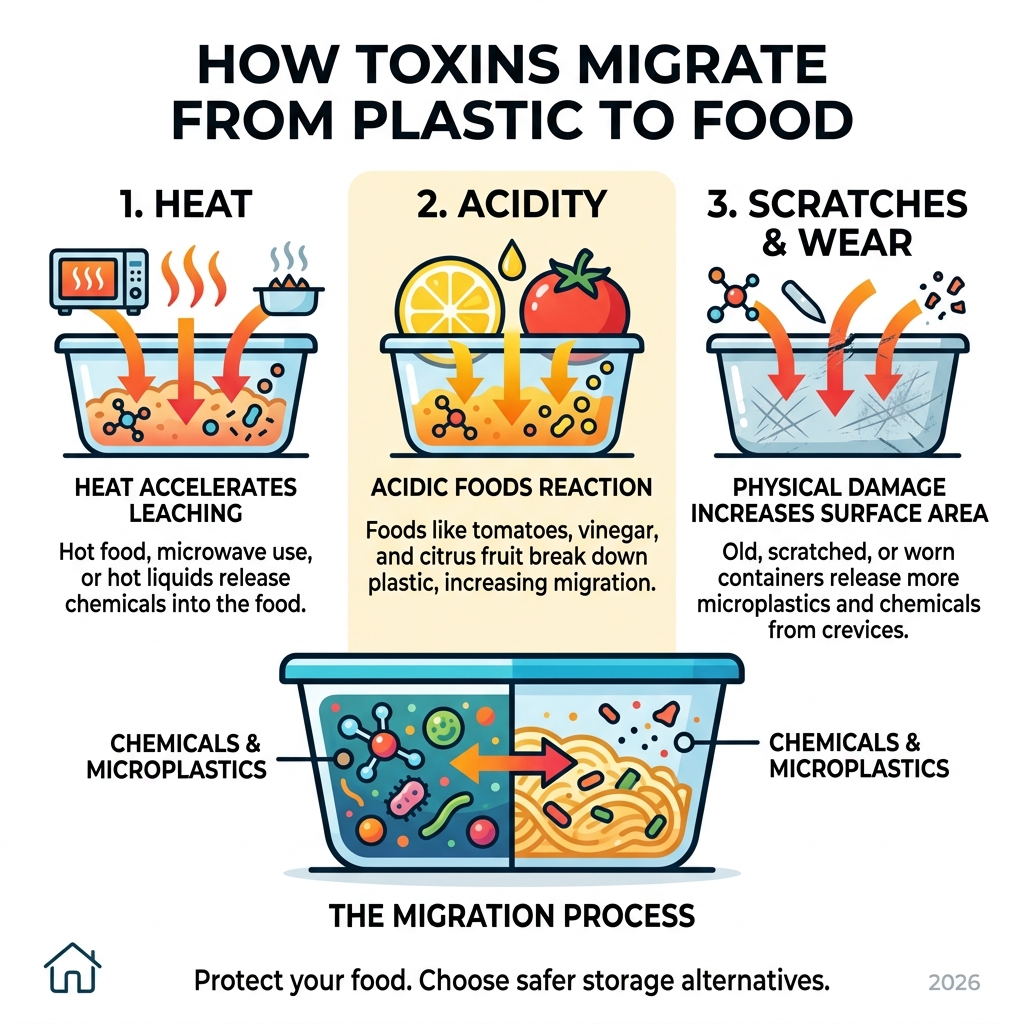
Then there are PFAS, often called “forever chemicals.” These are frequently found in takeout containers and grease-resistant wrappers. Unlike your favorite pair of jeans, these chemicals never wear out; they accumulate in our bodies and the environment. When we heat food in plastic or store acidic items like lemon-dressed salads, the rate of chemical migration increases significantly.
Furthermore, the environmental impact is staggering. With only 9% of plastic actually being recycled, the vast majority ends up in landfills or our oceans. As these plastics break down, they turn into microplastics—tiny particles that have been discovered in produce, animals, and virtually every corner of the planet. By choosing non toxic food storage, we aren’t just protecting our internal health; we are making a conscious choice for the planet’s health. For more on this, check out our guide on eco-friendly-storage-solutions-for-a-greener-home.
The Best Materials for Non Toxic Food Storage
When we decide to break up with plastic, the next question is: what should we date instead? Not all materials are created equal. We need options that are durable, safe, and won’t require a degree in chemistry to understand.
| Material | Best Use Case | Pros | Cons |
|---|---|---|---|
| Borosilicate Glass | Reheating & Leftovers | Thermal shock resistant, non-reactive | Heavier, can break if dropped |
| 304 Stainless Steel | Kids’ Lunches & Travel | Unbreakable, lightweight, bacteria-resistant | Not microwave-safe, opaque |
| Platinum Silicone | Snacks & Freezing | Flexible, lightweight, leakproof | Can retain odors, high-heat limits |
| Ceramic Coating | Aesthetic Meal Prep | Non-stick, toxin-free, oven-safe | Can chip if handled roughly |
Choosing the right material is a commitment to clean living. Understanding these standards is the first step toward creating a healthier home environment.
Glass and Ceramic: The Gold Standard for Non Toxic Food Storage
If there were a “Hall of Fame” for non toxic food storage, glass would be the first inductee. Specifically, borosilicate glass—the kind used in high-end lab equipment—is the gold standard. It can withstand temperatures up to 400°C, meaning you can take it from the freezer to the oven without it shattering into a million pieces (a phenomenon known as thermal shock).
Glass is completely non-reactive. It doesn’t matter if you’re storing fermented kimchi or a highly acidic tomato sauce; nothing is leaching into your food. Brands like Caraway have elevated this even further by offering ceramic-coated glass. These containers provide a naturally non-stick surface that is third-party tested for over 200 types of PFAS and 20+ heavy metals. Plus, let’s be honest, they look fantastic in a fridge.
Ceramic and glass are also stain-resistant and odor-resistant. You’ll never have to smell last month’s curry while eating this morning’s yogurt. If you’re looking to organize your pantry with these materials, our diy-sustainable-storage-solutions-to-organize-your-home guide offers some great inspiration.
Silicone and Stainless Steel: Durable Non Toxic Food Storage for On-the-Go
While glass is great for the home, it’s not always the best travel companion. If you’ve ever had a glass container shatter in your gym bag, you know the pain. This is where stainless steel and silicone shine.
Stainless steel (specifically grades 304 or 316) is virtually indestructible. It’s the perfect choice for school lunches or outdoor adventures. It’s naturally resistant to bacteria and corrosion. Brands like reVessel advocate for these premium materials because they are built to last a lifetime, reducing the need for constant replacements.
Food-grade silicone is another versatile hero. However, we must ensure it is “platinum-cured” and carries an LFGB certification. The LFGB (German) standard is much stricter than the FDA, ensuring the silicone doesn’t contain cheap fillers that could leach when heated. W&P offers a range of silicone bags and bowls that have earned over 10,000 5-star reviews for their durability and ease of use. They are lightweight, leakproof, and can even be flipped inside out for a thorough cleaning. You can find more of our top-picks-for-reusable-home-products to help round out your portable kitchen kit.
How to Choose the Right Containers for Your Lifestyle
Selecting the best non toxic food storage isn’t just about the material; it’s about how that container fits into your chaotic, beautiful life. We’ve found that the best systems are those that eliminate friction in the kitchen.

When shopping, look for these key features:
- Leakproof Seals: There is nothing worse than a “leakproof” container that paints the inside of your bag with lentil soup. Look for containers with snapping latches or high-quality silicone gaskets.
- Stackability: Space is a premium. Rectangular containers usually stack more efficiently than round ones, helping you maximize fridge and pantry real estate.
- Thermal Shock Resistance: If you meal prep, you want containers that can go from the freezer to the microwave or oven. Borosilicate glass is your best friend here.
- Ease of Cleaning: If it’s not dishwasher safe, will you actually use it? Most high-quality glass and silicone are dishwasher safe, though we recommend hand-washing bamboo lids to prevent warping.
In real-world tests, brands like Rubbermaid Brilliance Glass and Glasslock have consistently performed well in durability and leakage tests. Experts often recommend these for their vacuum-like seals and crystal-clear visibility. For those looking to get creative, our guide-to-making-reusable-household-items can help you supplement your store-bought sets with DIY solutions.
Frequently Asked Questions about Safe Kitchenware
We know that transitioning to a non-toxic kitchen can feel overwhelming. Here are some of the most common questions we hear from the FinanceZenX community.
What certifications should I look for in non-toxic containers?
Don’t just take a brand’s word for it. Look for third-party verification.
- FDA-Approved: The baseline for food safety in the US.
- LFGB Certified: The gold standard for silicone, ensuring no volatile residues.
- Prop 65 Compliant: Ensures the product is free from chemicals known to cause cancer or birth defects.
- PFAS-Free/BPA-Free: Specifically, look for brands that test for the “full spectrum” of these chemicals to ensure your containers are truly safe and free from harmful additives.
Is BPA-free plastic actually safe for food?
In a word: No. As we mentioned earlier, “BPA-free” often just means the manufacturer swapped one bisphenol for another (like BPS). Studies have shown that these alternatives can still exhibit estrogenic activity. Furthermore, all plastic eventually degrades. When plastic gets scratched or cloudy, it’s a sign that it’s shedding microplastics and chemicals at an accelerated rate. If you must use plastic, never heat it, and replace it the second it shows signs of wear. For more tips on reducing waste, check out our zero-waste-kitchen-hacks-that-you-can-diy.
How can I transition to a plastic-free kitchen on a budget?
You don’t need to drop $500 on a matching set today. In fact, that wouldn’t be very “Zen” of your finances!
- Upcycle: Old glass jars from pasta sauce or pickles are the ultimate budget-friendly non toxic food storage. Just wash them thoroughly and use them for grains, leftovers, or smoothies.
- Buy in Sets: Buying a 10-piece set is almost always cheaper per unit than buying individual containers.
- Focus on Longevity: A $30 stainless steel lunchbox might seem expensive, but if it lasts 10 years, it’s far cheaper than buying a new plastic one every year.
- Beeswax Wraps: Replace single-use plastic wrap with reusable beeswax wraps. They are affordable and can be composted at the end of their life.
Conclusion
At FinanceZenX, we believe that true wealth includes your health and the health of our planet. Making the switch to non toxic food storage is one of those rare “win-win-win” scenarios: you reduce your exposure to harmful chemicals, you save money in the long run by investing in durable goods, and you significantly lower your environmental footprint.
Start small. Replace your most-used plastic containers first—the ones you use for reheating or storing hot soups. Before you know it, your kitchen will be a sanctuary of glass, steel, and ceramic, keeping your food fresh and your body safe.
Ready to take the next step in your sustainable journey? Explore our top picks for eco-friendly products and join the movement toward a cleaner, greener home.
