
Why Eco Friendly Saving Habits Are the Smartest Financial Move You Can Make
Eco friendly saving habits are daily choices that cut both your environmental footprint and your household expenses at the same time.
Here are the most impactful ones to start with:
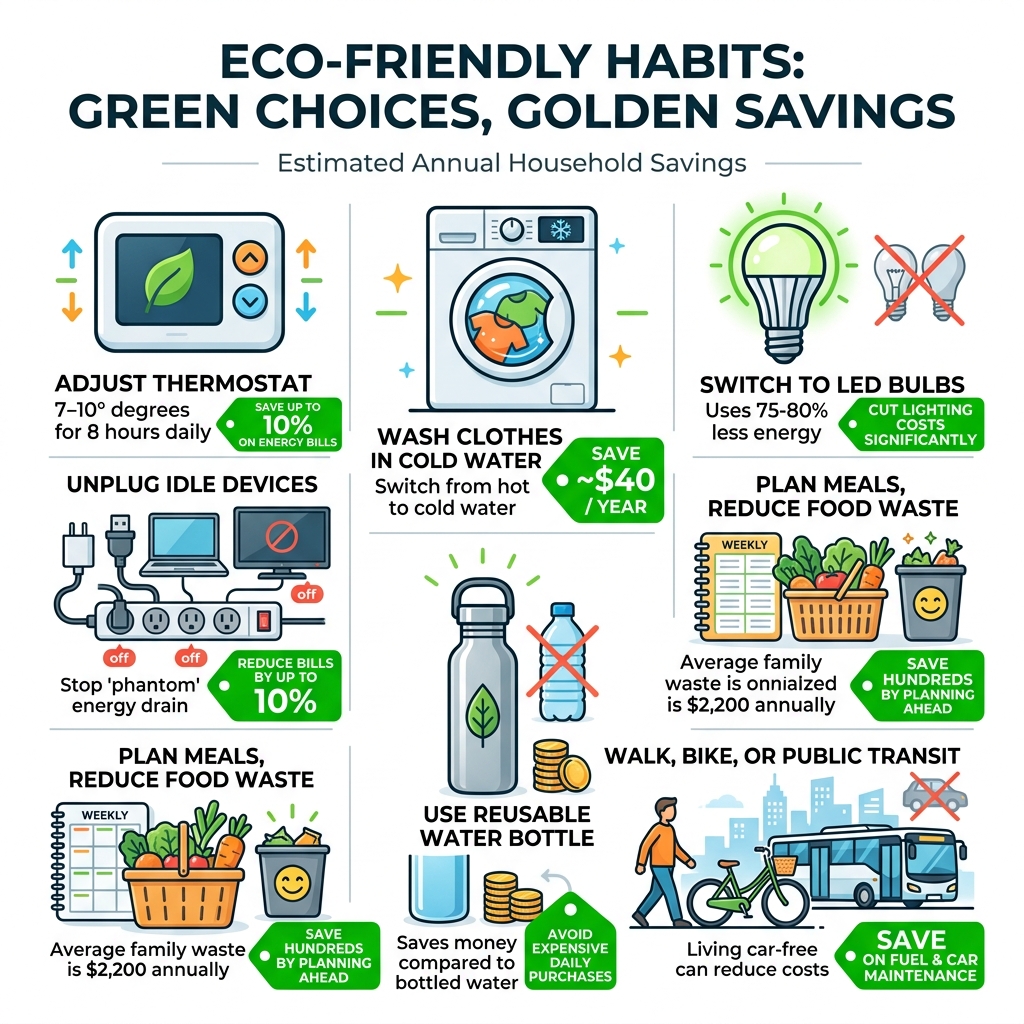
- Adjust your thermostat 7-10 degrees for 8 hours a day – saves up to 10% on your annual energy bill
- Wash clothes in cold water – saves around $40 per year
- Switch to LED bulbs – uses 75-80% less energy than incandescent bulbs
- Unplug idle devices – phantom power eats up almost 10% of your energy bill
- Reduce meat consumption – shifting to a vegetarian diet cuts your carbon footprint by up to 500 kg of CO2 per year
- Use a reusable water bottle – bottled water requires 2,000 times more energy to produce than tap water
- Plan meals and reduce food waste – the average American family wastes $2,200 in food annually
- Walk, bike, or take public transit – living car-free can reduce your carbon footprint by up to 2 tons of CO2 per year
Here’s the thing most people get wrong: they think going green means spending more. A Deloitte study found that over half of consumers haven’t adopted a sustainable lifestyle simply because they believe eco-friendly options cost more.
That belief is costing them money.
The truth is the opposite. Most eco friendly habits directly lower your bills – on energy, groceries, transportation, and everyday purchases. Small individual steps genuinely add up, both for your wallet and for the planet.
This guide breaks down exactly which habits deliver the biggest financial and environmental returns – and how to start today.
The Core of Frugal Sustainability
At FinanceZenX, we believe that “frugal sustainability” is the ultimate intersection of financial wellness and ecological responsibility. It isn’t about deprivation; it’s about intentional living. When we shift our mindset from mindless consumption to resource conservation, our bank accounts naturally begin to grow.
The foundation of eco friendly saving habits starts with a minimalist approach. By distinguishing between “needs” and “wants,” we stop the flow of “stuff” into our homes that eventually ends up in a landfill. Every item we don’t buy is money stayed in our pocket and carbon kept out of the atmosphere.
Practical tips for eco-friendly savings:
- Prioritize Quality: The “buy nice or buy twice” rule is real. A $150 pair of durable shoes worn 500 times costs $0.30 per wear, while a cheap $40 pair that falls apart after 50 wears costs $0.80 per wear.
- Borrow Before Buying: Need a power drill for one Saturday project? Check a community tool library or ask a neighbor.
- Refuse Packaging: Opting for products with minimal or no packaging often means you aren’t paying the “marketing tax” built into fancy boxes.
High-Impact Eco Friendly Saving Habits for Your Home
Our homes are often the biggest source of “hidden” waste. From the water running down the drain to the electricity powering a TV no one is watching, these inefficiencies bleed money.

Mastering Energy Efficiency
Did you know that 90% of the electricity used by incandescent light bulbs is wasted as heat? Switching to LEDs is one of the fastest ways to see a return on investment. While the bulbs cost a bit more upfront, they last 15–25 years and use up to 80% less energy.
The “Energy Vampire” Problem: Almost 10% of your energy bill goes toward “phantom power”—the energy devices use while in standby mode. We recommend using smart power strips that completely cut power to electronics when they aren’t in use.
Climate Control: Adjusting your thermostat by just 7 to 10 degrees for eight hours a day can yield up to a 10% saving on your annual energy bill. If you have the flexibility, installing a programmable thermostat can automate these savings so you never have to think about it.
| Lighting Type | Annual Operating Cost (Approx) | Lifespan |
|---|---|---|
| Incandescent | $12.00 – $15.00 | 1,000 hours |
| LED | $1.50 – $3.00 | 25,000+ hours |
Water Conservation Strategies
Water is a precious resource that we often literally flush away. A five-minute shower typically uses 10–25 gallons of water, while a full bath can use up to 70 gallons. By simply switching to shorter showers and installing low-flow faucet aerators, a family of four can save over 18,000 gallons of water annually.
Other quick wins:
- Leak Detection: A tiny drip can waste 3,000 gallons a year. Check your toilets and faucets regularly.
- Full Loads Only: Only run the dishwasher or washing machine when they are completely full.
- Cold Water Laundry: About 90% of the energy used by a washing machine goes toward heating the water. Switching to cold saves about $40–$200 a year depending on your local utility rates and usage.
Slashing Grocery Bills with Sustainable Food Choices
Food waste is a silent budget killer. In the United States, nearly 40% of edible food goes to waste, costing the average household about $1,500 to $2,200 per year.
Meal Planning is Key: By spending 20 minutes a week planning your meals and shopping with a strict list, you avoid impulse buys and ensure that every head of lettuce you buy actually gets eaten. We love the “Eat First” shelf—a designated spot in the fridge for items nearing their expiration date.
The Meat Connection: Livestock production is a massive contributor to greenhouse gas emissions. Shifting from a mixed diet to a vegetarian one can reduce your carbon footprint by 500kg of CO2e per year. Financially, plant-based proteins like lentils, beans, and chickpeas are significantly cheaper than beef or poultry. Even “Meatless Mondays” can save a family hundreds of dollars over the course of a year.
Growing and Sourcing Locally
You don’t need a farm to grow food. A windowsill herb garden can save you $5 every time you need fresh basil or mint. For those with a bit more space, potatoes and tomatoes are incredibly easy beginner crops that thrive in planters.
Shopping Strategies:
- Farmers Markets: Buying seasonal produce locally often means it lasts longer (it hasn’t spent two weeks on a truck), reducing waste.
- Bulk Buying: Use zero-waste stores or bulk aisles to buy grains and spices. You’ll save 20–40% by not paying for individual plastic containers.
- Composting: Instead of throwing scraps away, turn them into “black gold” for your garden. This reduces methane emissions from landfills and saves you money on fertilizer.
Conscious Consumption and Transportation Shifts
How we move and what we buy defines our environmental impact.
Transportation Alternatives
Living car-free is the “gold standard” of eco friendly saving habits, potentially reducing your carbon footprint by 2 tons of CO2e annually. If that isn’t feasible, biking to work just one day a week cuts your weekly commute emissions by 20%.
Telecommuting: If your job allows it, working from home half the time can save you thousands in fuel and maintenance while significantly cutting national emissions. When you do have to drive, ensure your tires are properly inflated; a tire that is 20% underinflated can increase fuel consumption by 10%.
Repair Culture and the Circular Economy
The “fast fashion” industry is responsible for 10% of global carbon emissions. We can fight this by embracing a “repair over replace” mentality.
- Second-hand First: Before buying new, check platforms like eBay, Facebook Marketplace, or local thrift stores.
- Clothing Swaps: Host a swap with friends to refresh your wardrobe for free.
- DIY Cleaning: You can clean almost anything with white vinegar, baking soda, and lemon. These pantry staples are pennies compared to $7 bottles of chemical cleaners.
Debunking Myths About Eco Friendly Saving Habits
One of the most persistent myths is that “going green is only for the wealthy.” This is often fueled by high-end “sustainable” brands that market $100 organic cotton t-shirts.
The ROI of Green Choices: While some upgrades like solar panels or Energy Star appliances have an upfront cost, they are investments with a high Return on Investment (ROI). For example, solar panels can cut 1.6 tons of carbon emissions annually and eventually pay for themselves through eliminated power bills. However, the most effective eco friendly saving habits—like eating less meat, walking more, and turning off lights—actually cost zero dollars to start.
Quick-Start Challenges for Eco Friendly Saving Habits
Feeling overwhelmed? Try one of these bite-sized challenges this week:
- Zero-Waste Lunch: Pack your lunch using only reusable containers and cloth napkins. No plastic baggies allowed!
- Digital Declutter: Clean out your email inbox. An average year of email has a carbon footprint equivalent to driving 200 miles.
- No-Spend Weekend: Find free ways to have fun—hiking, visiting a library, or hosting a board game night.
- Plastic-Free Week: See if you can go seven days without buying anything in single-use plastic.
Frequently Asked Questions about Eco Friendly Saving Habits
Is eco-friendly living only for homeowners?
Absolutely not! Renters have plenty of options. You can use LED bulbs, install a removable low-flow showerhead (just keep the old one to put back when you move), and use “draft dodgers” to seal air leaks under doors. Renters can also focus heavily on lifestyle habits like meal planning, transit choices, and conscious shopping, which account for a huge portion of a person’s carbon footprint.
How much can I realistically save in the first year?
Most households that implement 10–15 of these tips save between $1,600 and $2,400 in their first year. Even starting with just five basic habits—like cold water laundry, thermostat adjustments, and reducing food waste—can save you roughly $800 to $1,200 annually.
Does individual action really impact global climate change?
Yes. While large-scale policy change is vital, individual actions shift markets. When millions of people choose reusable bags, companies stop producing as much plastic. When we reduce our energy demand, utility companies move toward renewables faster. According to Rest Less, small individual steps add up to massive environmental change.
Conclusion
At FinanceZenX, our philosophy is simple: a healthy planet and a healthy bank account go hand-in-hand. By adopting eco friendly saving habits, you aren’t just “saving for a rainy day”—you’re ensuring the planet stays healthy enough to enjoy that future.
Sustainable living is a journey of progress, not perfection. Start with one habit today, whether it’s unplugging your toaster or planning your next three meals. Your wallet—and the Earth—will thank you.
