
Why Easy Zero Waste Swaps Are Worth Starting Today
Easy zero waste swaps are simple product replacements that cut plastic waste, save money, and reduce your environmental footprint — no major lifestyle overhaul required.
Here are the most impactful swaps to start with:
| Swap | Replace | Saves |
|---|---|---|
| Reusable tote bag | Plastic shopping bags | Hundreds of bags per year |
| Stainless steel water bottle | Plastic bottles | Up to 730 bottles/year per person |
| Bamboo toothbrush | Plastic toothbrush | 1 brush every 3 months from landfill |
| Cloth napkins | Paper napkins | Dozens of rolls annually |
| Beeswax wraps | Plastic wrap | 100+ wraps per year |
| Safety razor | Disposable razors | Years of plastic handles |
| Reusable coffee cup | Disposable cups | 365+ cups per year |
| Menstrual cup or period underwear | Disposable pads/tampons | Up to 10,000 products over a lifetime |
The average American throws away 4.5 pounds of trash every single day. A lot of that waste comes from disposable products we buy, use once, and toss — things like plastic bags, coffee cups, and paper towels.
The good news? Most of these have simple, affordable alternatives that pay for themselves quickly.
You don’t need to overhaul your life overnight. The most effective approach is to swap one item at a time, starting when your current product runs out — not by throwing away things that still work.
This guide covers swaps room by room, from your kitchen to your bathroom to your bag, so you can build sustainable habits gradually and actually stick with them.
Introduction
Embarking on a zero-waste journey doesn’t mean you have to live in a cabin in the woods or produce only a “mason jar” of trash per year. At FinanceZenX, we believe the most powerful changes are the ones that align your financial health with the health of the planet. By focusing on easy zero waste swaps, we can collectively divert millions of tons of trash from landfills while keeping more money in our bank accounts.
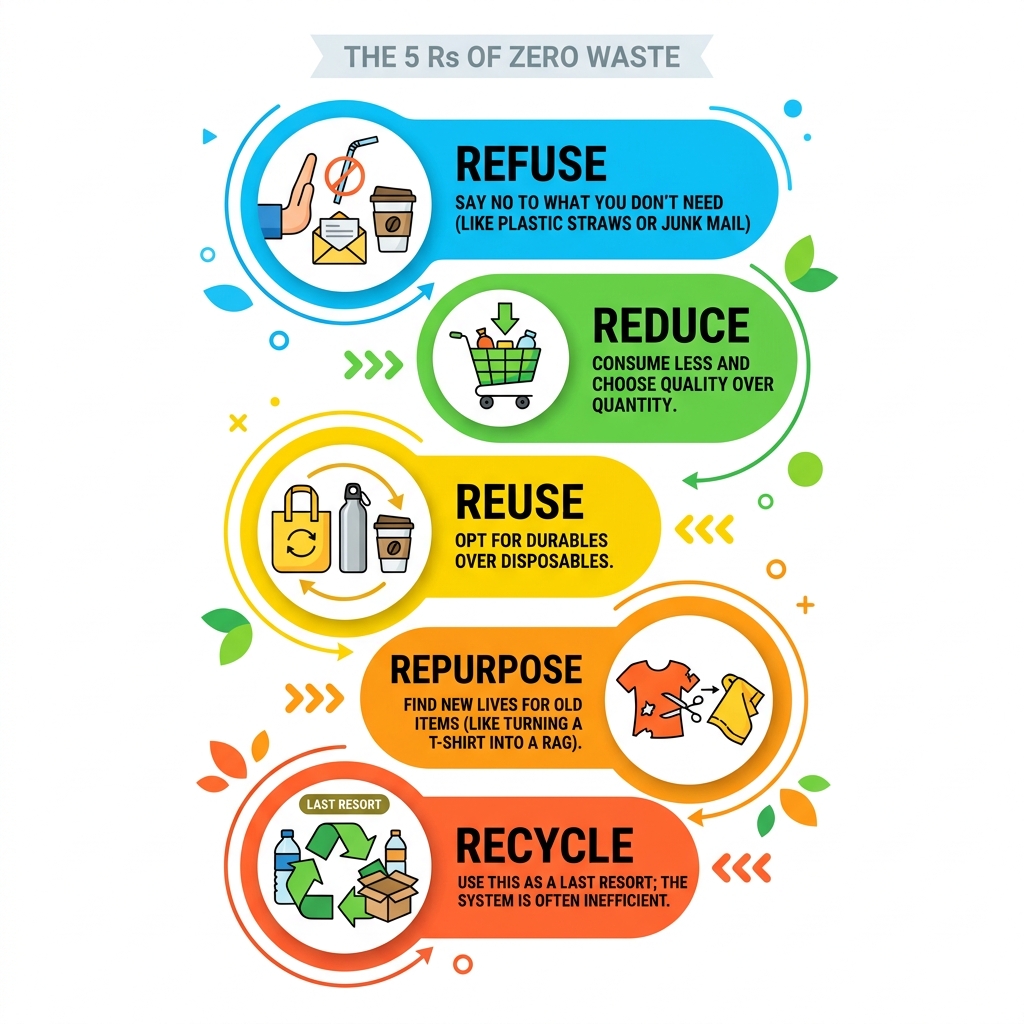
Sustainable living is fundamentally about the “5 R’s”:
- Refuse: Say no to what you don’t need (like plastic straws or junk mail).
- Reduce: Consume less and choose quality over quantity.
- Reuse: Opt for durables over disposables.
- Repurpose: Find new lives for old items (like turning a tattered t-shirt into a rag).
- Recycle: Use this as a last resort, as the recycling system is often inefficient.
Easy Zero Waste Swaps for Your Kitchen and Grocery Routine
The kitchen is often the “trash capital” of the home. From plastic wrap to paper towels, the amount of single-use items we consume while preparing food is staggering. However, it’s also the easiest place to see immediate financial returns.
Ditching Disposables in the Pantry
One of the most effective easy zero waste swaps involves rethinking how we store and clean up after food.
- Beeswax Wraps & Silicone Lids: Instead of wrestling with plastic wrap that never sticks and ends up in the ocean, use beeswax wraps. These are made from cotton infused with wax and resin; they mold to the shape of your bowls using the warmth of your hands. For high-heat needs or airtight seals, silicone stretch lids are a fantastic one-time purchase.
- Glass Jars and Snapware: Stop buying expensive matching container sets. Upcycle glass jars from pasta sauce or pickles. They are non-toxic, don’t leach chemicals like BPA, and look beautiful on a shelf. For leftovers, glass snapware is superior to plastic because it doesn’t stain or hold odors.
- Swedish Dishcloths: These are a hybrid between a sponge and a towel. One Swedish dishcloth can replace up to 17 rolls of paper towels. They are compostable at the end of their life, unlike synthetic sponges.
The Cost of Convenience: Paper Towels vs. Rags
| Item | Annual Cost (Avg. Household) | Lifespan | 5-Year Total |
|---|---|---|---|
| Paper Towels | $150 – $250 | Seconds | $750 – $1,250 |
| Reusable Cloth Rags | $0 (Upcycled) – $20 | Years | $20 |
Sustainable Grocery Shopping Habits
Grocery shopping is where the waste begins. We can stop it at the source with a few simple tools:
- Tote Bags: Keep 2-3 folded bags in your car or purse. Many stores now offer a small discount (5–10 cents) for bringing your own, which adds up over time.
- Produce Bags: You don’t actually need those thin plastic rolls for your apples or lemons. You can go “bagless” for thick-skinned produce or use lightweight mesh cotton bags for smaller items like green beans.
- Bulk Shopping with Tare Weights: Find a store that allows you to bring your own jars. Use a grease pencil to write the “tare weight” (the weight of the empty jar) on the lid so the cashier can subtract it from the total. This allows you to buy exactly the amount you need, reducing food waste and packaging.
Sustainable Personal Care: From Bamboo Toothbrushes to Safety Razors
The bathroom is another area where plastic is rampant. Did you know that every plastic toothbrush ever created since the 1930s still exists somewhere on Earth?
Beginner-Friendly Easy Zero Waste Swaps for the Bathroom
Starting your zero-waste bathroom transition is as simple as looking at what you use every morning.
- Bamboo Toothbrushes: These work exactly like plastic ones but have compostable handles. Once the bristles are worn, pull them out with pliers and toss the handle in your compost bin.
- Bar Soaps & Shampoo Bars: Liquid soap is mostly water packaged in plastic. Switching to high-quality bars for body wash, shampoo, and even conditioner eliminates the bottle entirely. Pro tip: Keep your bars on a well-draining soap dish to make them last twice as long.
- Toothpaste Tabs: These are chewable pellets that foam up when you brush. They come in glass jars or compostable pouches, eliminating the unrecyclable plastic-and-aluminum toothpaste tube.
Zero Waste Period and Shaving Essentials
These swaps might feel “advanced,” but they offer the biggest long-term savings.
- The Safety Razor: Disposable razors are expensive and wasteful. A stainless steel safety razor is a one-time investment that provides a closer, smoother shave. The only ongoing cost is the metal blades, which cost about 10–25 cents each and can be recycled in a “blade bank.”
- Menstrual Cups & Period Underwear: The average person uses over 10,000 menstrual products in their lifetime. A single menstrual cup can last up to 10 years, and period underwear provides a leak-proof, washable alternative to pads (which can contain the equivalent of four plastic bags each!).
- Bidet Attachments: Americans use 8 million tons of toilet paper a year. A simple bidet attachment can reduce your TP usage by 75% or more, paying for itself in just a few months while providing a superior clean.
Low-Waste Living on the Move: Essential On-the-Go Swaps
Waste happens most often when we are unprepared. By building a small “zero waste kit,” we can avoid the “convenience trap” of single-use plastics.
Implementing Easy Zero Waste Swaps While Traveling
Travel often forces us into using disposables, but it doesn’t have to.
- The 730 Bottle Rule: If you cut out just two plastic water bottles a day, you save 730 bottles a year. Carrying a stainless steel bottle is the single easiest way to reduce your footprint.
- The 500 Billion Cup Problem: 500 billion disposable cups are produced annually, and most cannot be recycled due to their plastic lining. Bringing your own travel mug often earns you a discount at local cafes.
- Liquid-Free Toiletries: When flying, shampoo bars and toothpaste tabs are “solids,” meaning you don’t have to worry about TSA liquid limits or messy leaks in your suitcase.
Building a Portable Zero Waste Kit
Keep these items in your backpack or car so you’re never caught off guard:
- Reusable Utensils: A bamboo or stainless steel set means you never have to use a flimsy plastic fork again.
- Cloth Drawstring Bags: These are perfect for snacks, organizing electronics, or picking up a pastry at a bakery.
- Handkerchiefs: They aren’t just for your grandpa! A clean cotton handkerchief replaces endless packets of tissues and is much softer on your nose.
The Economics of Sustainability: Upfront Costs vs. Long-Term Savings
At FinanceZenX, we focus on the “Return on Investment” (ROI) of your lifestyle. While some easy zero waste swaps have a higher upfront cost, the long-term savings are undeniable.
One-Time Purchases vs. Ongoing Maintenance
Understanding which items are “buy it for life” helps you budget effectively.
- One-Time Investments: Items like cast iron pans, safety razors, menstrual cups, and stainless steel water bottles should last a decade or more if cared for properly.
- Low Maintenance: Wool dryer balls replace dryer sheets forever. They reduce drying time by improving airflow, saving you money on your electricity bill every single month.
- Mending Kits: Learning to sew a button or patch a small hole in your favorite jeans is a “zero waste swap” for your wardrobe that prevents you from having to buy new clothes prematurely.
For more deep dives into managing your budget while going green, check out our sustainable living tips.
Affordable Sourcing and DIY Options
You don’t need to shop at high-end boutiques to go zero waste.
- Thrift Stores: Second-hand shops are gold mines for glass jars, cotton linens (to turn into rags), and kitchen tools.
- Citrus Vinegar Cleaner: Don’t buy expensive “eco-friendly” sprays. Fill a jar with citrus peels, cover with white vinegar, let it sit for two weeks, and strain. It’s a powerful, non-toxic degreaser.
- Baking Soda: This humble pantry staple is a miracle worker for scrubbing sinks, deodorizing carpets, and even acting as a gentle laundry booster.
Frequently Asked Questions about Easy Zero Waste Swaps
Should I throw away my existing plastic items to go zero waste?
Absolutely not! The most sustainable item is the one you already own. Throwing away a perfectly functional plastic Tupperware set just to buy glass ones creates more waste. Use your current items until they are truly worn out. If you’re worried about plastic leaching into food, repurpose those containers to hold craft supplies, hardware, or office items.
Are zero waste products more expensive than disposables?
Initially, yes. A safety razor might cost $30, while a pack of disposables costs $7. However, the safety razor lasts a lifetime and the blades cost pennies. Within a year, the safety razor is significantly cheaper. Sustainability is an investment in your future self’s bank account.
How do I maintain and clean my reusable swaps?
- Beeswax Wraps: Wash in cool water with a tiny bit of mild soap. Hot water will melt the wax!
- Menstrual Cups: Sterilize in boiling water for 5 minutes between cycles.
- Produce Bags: Toss them in the laundry with your towels once a week and air dry to prevent shrinkage.
Conclusion
Transitioning to a more sustainable lifestyle isn’t about being perfect; it’s about being mindful. Every time you choose a reusable bottle over a plastic one, or a cloth rag over a paper towel, you are making a vote for a cleaner planet and a healthier wallet.
At FinanceZenX, we believe that small, consistent actions lead to massive financial and environmental shifts. Start with just two or three easy zero waste swaps this month. Once those become habits, add a few more. Before you know it, you’ll have a home that is lighter on the earth and a bank account that is heavier for it.
Start your sustainable journey with these expert tips and join our community of EcoWarriors today!
