
Your Granite Countertops Deserve Better Than Harsh Chemicals
The best natural cleaner for granite countertops is a simple mix of isopropyl rubbing alcohol, a few drops of castile soap, and distilled water in a spray bottle. Here’s a quick breakdown of the top natural options:
Top Natural Granite Cleaners at a Glance:
| Option | Best For | Key Ingredients |
|---|---|---|
| DIY alcohol + castile soap spray | Daily cleaning | Rubbing alcohol, castile soap, water |
| Baking soda + hydrogen peroxide paste | General stains (coffee, tea) | Baking soda, hydrogen peroxide |
| Baking soda + dish soap paste | Oil-based stains | Baking soda, water, dish soap |
| Aunt Fannie’s Granite + Stone Cleaner | Ready-made option | EWG ‘A’ rated |
| Seventh Generation Granite & Stone Cleaner | Eco-certified option | EPA Safer Choice certified |
Granite countertops are tough. They handle heat, resist scratches, and look beautiful for decades. But there’s a catch: granite is porous.
That means liquids seep in. And the wrong cleaner can quietly destroy the protective sealant that keeps your countertop looking new.
Most commercial cleaners are too harsh. According to EWG’s Guide to Healthy Cleaning, out of 13 granite and stone cleaners evaluated, only 2 received an ‘A’ rating — the rest scored C or lower, with some flagged for risks like asthma triggers, cancer concerns, and chemical burns.
The good news? You don’t need any of that. Natural cleaners work just as well — and they’re cheaper, safer, and far kinder to the planet.
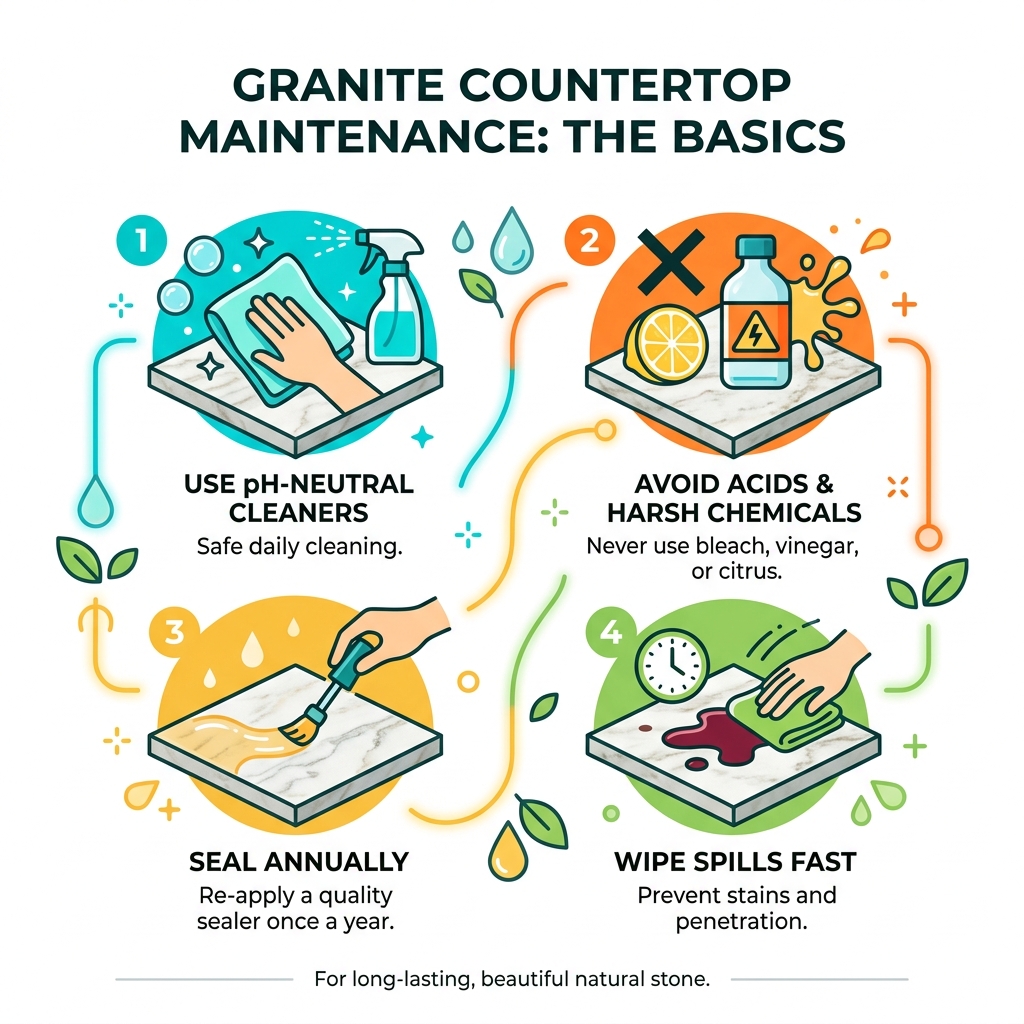
Why You Need the Best Natural Cleaner for Granite Countertops
When we talk about the best natural cleaner for granite countertops, we aren’t just being “picky” about ingredients. We are protecting an investment. Granite is a natural stone, and while it feels like a rock (because it is), it behaves more like a sponge if it isn’t sealed correctly.
Using harsh chemicals like bleach or ammonia can strip away the protective sealant in a matter of weeks. Once that sealant is gone, every drop of red wine or coffee becomes a potential permanent resident of your kitchen island.
But beyond the stone itself, we have to think about our indoor air quality. Many traditional cleaners contain volatile organic compounds (VOCs) that linger in the air long after the counters are “clean.” By choosing natural options, we protect our respiratory health and minimize toxic exposure for our families and pets.
At FinanceZenX, we believe that sustainable living and financial wellness go hand-in-hand. Spending $15 on a specialty chemical cleaner that actually damages your $5,000 countertops is a poor financial move. Making your own for pennies—or buying a high-rated, safe commercial option—is an investment in your home’s longevity. If you’re interested in more ways to swap out toxins, check out our guide on Uncovering the Best Eco-Friendly Cleaning Products.

Top DIY Recipes for a Homemade Granite Shine
Making your own cleaning solutions is one of the easiest ways to transition to a zero-waste lifestyle. It eliminates plastic waste from single-use bottles and ensures you know exactly what is touching your food preparation surfaces.
The secret to a great DIY granite cleaner is the pH level. Granite hates acid (vinegar and lemon) and it hates high alkaline (bleach). We want something neutral. Most expert sources, including How to Make Your Own All-Natural Granite Cleaner, suggest using isopropyl alcohol as the base because it disinfects and evaporates quickly, leaving a streak-free finish.
For more inspiration on greening your entire home, see our Natural Cleaning Product Recipes for a Greener Home.
The Best Natural Cleaner for Granite Countertops (Daily Spray)
This is our go-to “everything” spray for stone. It’s effective, cheap, and smells wonderful.
The Ingredients:
- 1/2 cup Isopropyl rubbing alcohol (70% or higher is best for disinfection)
- 1 1/2 cups Distilled water (using distilled water prevents mineral streaks)
- 1/2 teaspoon Liquid castile soap (like Dr. Bronner’s) or a gentle dish soap
- 10-20 drops Essential oils (optional, but orange or peppermint are lovely)
The Process:
- Pour the alcohol and soap into a 16oz glass spray bottle.
- Add your essential oils.
- Fill the rest with distilled water.
- Shake gently.
To use, simply spray and wipe with a microfiber cloth. For that high-end “showroom” look, use a second, dry microfiber cloth to buff the surface in circular motions. This removes any tiny droplets and makes the granite sparkle. You can find variations of this recipe at DIY All-Natural Granite Countertop Cleaner and DIY Granite Cleaner – The Bold Abode.
Heavy-Duty Stain Removal with Natural Ingredients
Sometimes, despite our best efforts, a stain happens. Maybe a leaky oil bottle sat too long or a splash of blueberry juice was missed. For these moments, we use the “poultice” method. This is a fancy way of saying we make a paste that “sucks” the stain out of the stone.
For Organic Stains (Coffee, Tea, Juice): Mix baking soda and hydrogen peroxide into a thick paste (the consistency of peanut butter). Apply it to the stain, cover it with plastic wrap, and poke a few holes in the top. Let it sit for 24 hours. As the paste dries, it pulls the liquid out of the granite. Gently wipe it away with a damp cloth.
For Oil-Based Stains (Cooking Oil, Grease): Mix baking soda with a little water and a drop of dish soap. Follow the same 24-hour application method. This is a tried-and-true technique mentioned in DIY Granite Cleaner Recipe (All Natural & Works Great!) – DIY Candy.
For more deep-cleaning hacks, visit Natural and Organic Home Cleaners for a Spotless Home.
Commercial Options: Safest Natural Granite Cleaners According to EWG
We realize that not everyone has the time or desire to play “mad scientist” in the kitchen. If you prefer to buy your cleaners, you need to be wary of “greenwashing.” Many products claim to be natural but still contain ingredients that can irritate the lungs or damage stone.
The Environmental Working Group (EWG) is our favorite resource for this. They screen products against over 3,000 banned ingredients. Here is how the top natural stone cleaners stack up:
| Brand | EWG Rating | Key Features |
|---|---|---|
| Aunt Fannie’s Granite + Stone Cleaner | A | Vinegar-free, plant-based, very safe |
| Sensitive Home Marble & Granite Cleaner | A | Free & Clear, hypoallergenic |
| Puracy Granite & Stone Cleaner | B/C* | 92% USDA Biobased, plant-powered |
| Seventh Generation Granite & Stone | C/B* | EPA Safer Choice, 100% natural fragrance |
*Ratings can fluctuate based on specific scent formulations.
If you’re looking for a reliable plant-powered option, Puracy Granite Cleaner is a standout with its high biobased score. Another excellent choice is the Seventh Generation Granite & Stone Cleaner, which is widely available and certified as a safer choice for families.
For a broader look at purchasing eco-friendly supplies, read Easy to Make Plant-Based Cleaners for the Home.
Maintenance Secrets: Sealing and Daily Care
Even the best natural cleaner for granite countertops can’t do its job if the stone isn’t properly sealed. Think of sealant like a wax job on a car; it provides a barrier that keeps the bad stuff out.
The Water Bead Test
How do you know if your granite is still protected? It’s simple. Pour a small amount of water (about the size of a coin) on various parts of your counter.
- If the water beads up and stays there, you’re good!
- If the stone darkens or the water soaks in within 10-15 minutes, it’s time to reseal.
We recommend resealing once a year, though high-traffic areas might need it more often. Regular cleaning with the right products—like the ones we’ve discussed—will actually help your sealant last longer. Harsh chemicals are what cause sealants to fail prematurely.
Daily Habits for Pristine Stone
- Use Coasters: Even “natural” drinks like orange juice are acidic and can etch the stone if they pool at the bottom of a glass.
- Cutting Boards are Mandatory: Granite is hard enough to dull your knives, and while it’s hard to scratch, it’s not impossible.
- Wipe Spills Immediately: Don’t let liquids sit. The faster you wipe, the less work your sealant has to do.
- Buff to Dry: Never let your cleaner air dry. Always give it a final buff with a dry microfiber cloth to prevent water spots and streaks.
For more tips on maintaining a beautiful, eco-friendly home, see Reviving Your Space with DIY Natural Cleaners.
What to Never Use on Your Best Natural Cleaner for Granite Countertops
It’s just as important to know what not to do. Many people assume that because vinegar is “natural,” it’s safe for everything. This is a dangerous mistake for stone owners.
- Vinegar and Lemon Juice: These are highly acidic. They will “etch” the granite, which looks like dull, cloudy spots that cannot be wiped away.
- Ammonia and Bleach: These are too alkaline and will strip your sealant instantly.
- Windex (Glass Cleaner): Most contain ammonia. Even the ammonia-free versions often have dyes and chemicals not suited for porous stone.
- Abrasive Pads: Steel wool or “scrubby” sponges can create microscopic scratches that dull the shine over time. Stick to soft cloths or sponges.
Frequently Asked Questions about Natural Granite Care
Is this cleaner safe for marble and other stone surfaces?
Yes! The DIY alcohol-based recipe is pH-neutral, making it safe for marble, travertine, limestone, and soapstone. Because these stones are even more sensitive to acid than granite, a neutral cleaner is actually a requirement for them. As noted in DIY Counter Cleaner Recipe! (Safe on Marble & Granite), a balanced formula is key to preventing residue on these delicate surfaces.
How do I know if my granite needs to be resealed?
Perform the water test mentioned above. If the water absorbs and leaves a dark spot (even if it dries later), the stone is no longer protected. Most homeowners find that an annual sealing schedule is sufficient for maintaining the integrity of the stone.
Can I use essential oils in my granite cleaner?
Absolutely. While you should avoid pouring acidic lemon juice on your counters, lemon essential oil is generally safe because it is extracted from the rind and doesn’t have the same acidic pH as the juice. Tea tree oil is another great addition due to its natural antimicrobial properties. Just ensure you shake the bottle before each use, as oils and water like to separate.
Conclusion
At FinanceZenX, our mission is to help you build a life that is both financially sound and ecologically responsible. Choosing the best natural cleaner for granite countertops is a small but significant step in that journey. Whether you choose to mix your own alcohol-based spray or purchase a highly-rated commercial product like Seventh Generation, you are choosing to protect your health and your home’s value.
By ditching harsh chemicals, you save money, reduce plastic waste, and ensure your kitchen remains a safe, sparkling space for years to come. It’s a win for your wallet and a win for the planet.
Ready to dive deeper into a sustainable lifestyle? Explore our full range of eco-friendly product guides to find more ways to harmonize your home with the environment.
