
Your Home Is Producing More Waste Than You Think
Environmentally friendly household items are practical, everyday products designed to reduce waste, cut toxic chemicals, and lower your environmental footprint — without making your life harder.
Here are the most impactful categories to start with:
| Category | Example Swaps |
|---|---|
| Kitchen | Beeswax wraps, compostable sponges, reusable bags |
| Bathroom | Bamboo toilet paper, bidet attachments, shampoo bars |
| Cleaning | Plant-based sprays, concentrated refills, dryer balls |
| Laundry | Plastic-free detergent pods, laundry sheets, cold-water formulas |
| Personal care | Safety razors, menstrual cups, bamboo toothbrushes |
The average American produces 5 pounds of waste every single day. That adds up fast — and a large chunk of it comes from ordinary household products we use without thinking twice.
The good news? Small swaps add up to a big difference.
Switching to reusable, plant-based, or plastic-free alternatives in your kitchen, bathroom, and laundry room can meaningfully cut your waste, reduce your exposure to harmful chemicals, and even save you money over time. A bidet attachment alone can reduce toilet paper use by 75%, saving the average household around $471 per year, according to research cited by the National Institutes of Health.
This guide walks you through the best eco-friendly swaps by room — what to buy, what to look for, and how to make the transition without burning out.
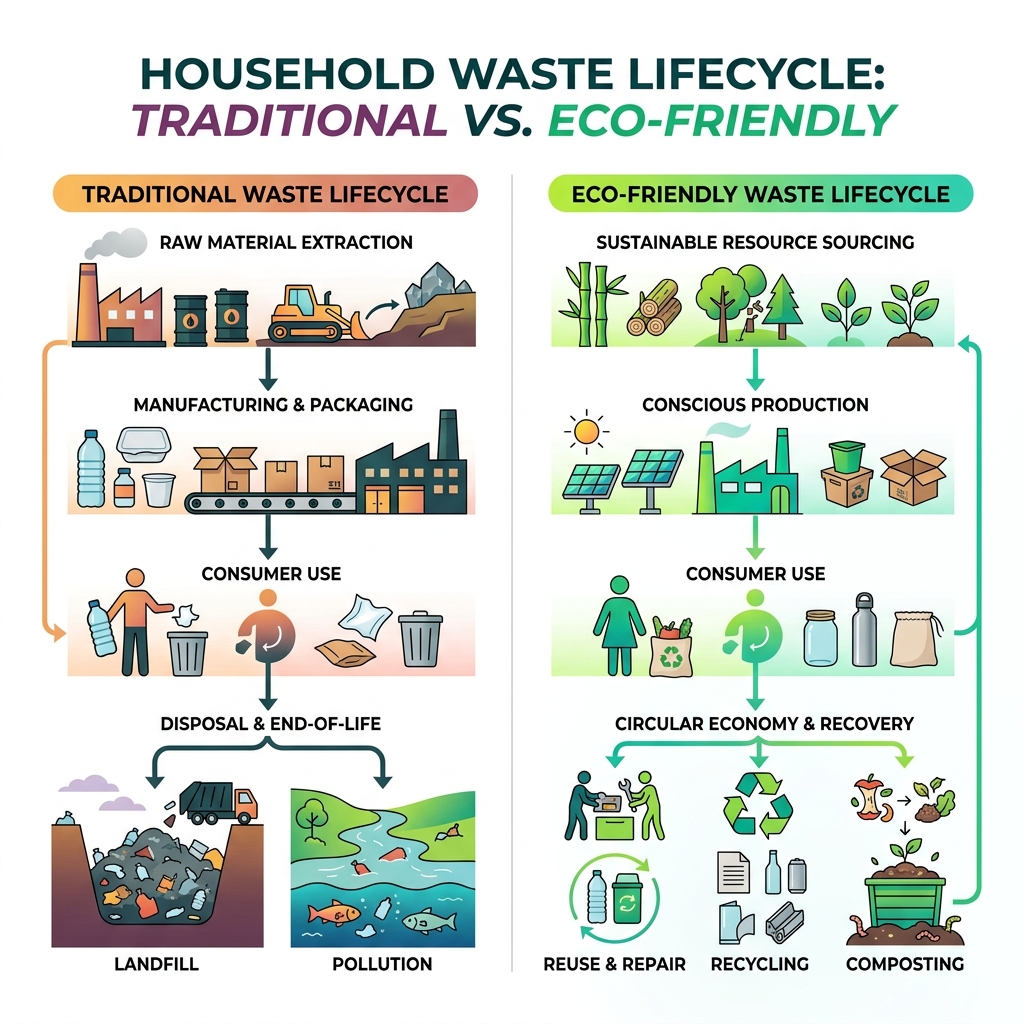
The Financial and Ecological Benefits of Environmentally Friendly Household Items
When we talk about environmentally friendly household items, it is easy to focus solely on the “green” aspect. However, at FinanceZenX, we believe the most sustainable lifestyle is one that also supports your bank account. The synergy between financial wellness and ecology is profound: by reducing what we consume, we naturally reduce what we spend.

The ecological stakes are high. Every day, over one million trees are cut down just to produce traditional toilet paper. By switching to tree-free alternatives or reusables, we directly combat deforestation. Furthermore, many modern eco-brands prioritize carbon-neutral shipping and participate in initiatives like 1% for the Planet, meaning a portion of your purchase price goes directly to environmental non-profits.
From a financial perspective, the “cost-per-use” is where eco-friendly items truly shine. While a box of 48 bamboo toilet paper rolls might seem like a larger upfront investment, data shows that for the average person, that single box can last an entire year. Similarly, moving away from single-use plastics reduces the “disposable tax” we pay every time we refill our pantry.
| Item | Single-Use Cost (Annual Est.) | Reusable/Eco Cost (Annual Est.) | Environmental Impact |
|---|---|---|---|
| Paper Towels | $150 – $200 | $30 (Reusable Cloths) | High deforestation vs. Zero waste |
| Plastic Water Bottles | $300+ | $20 (Filter + Bottle) | 450 years to decompose vs. Lifetime use |
| Dryer Sheets | $60 | $15 (Wool Balls) | Synthetic chemicals vs. Natural wool |
For more deep dives into how these choices impact your wallet and the planet, check out our Top Picks for Reusable Home Products and our guide on Everyday Eco: Sustainable Products for Daily Use.
Essential Kitchen and Dining Swaps for a Zero-Waste Home
The kitchen is often the “trash capital” of the home. Between food packaging, plastic wrap, and disposable sponges, it is the easiest place to start your transition to environmentally friendly household items.
One of the most effective swaps is moving from plastic to bamboo utensils and silicone food storage. Unlike plastic, which can leach chemicals into your food and eventually break down into microplastics, bamboo is a rapidly renewable resource that is naturally antimicrobial. For leftovers, ditch the cling wrap for beeswax wraps. These are washable, reusable, and biodegradable, sealing your food with the warmth of your hands.
Cleaning the kitchen also offers room for improvement. Traditional yellow-and-green sponges are often made of synthetic plastics that shed microplastics into our waterways with every scrub. Instead, look for compostable sponges made from wood pulp (cellulose) or coconut scour pads. These are tough on grease but gentle on the Earth.
When it comes to the soap you use, we recommend looking for formulas that are “Free & Clear.” For example, the Dish Soap – Free & Clear | Seventh Generation is a USDA Certified Biobased product (95%), meaning it relies on plants rather than petroleum to get your plates clean.
To learn more about specific tools, read our Biodegradable Kitchen Tools: A Review and A Review on the Best Eco-Friendly Kitchen Gadgets.
Sustainable Bathroom and Personal Care Essentials
The bathroom is a sanctuary, but it is also a major source of resource consumption. From the water we flush to the plastic bottles lining our showers, the potential for “greening” this space is massive.
The most significant change you can make is addressing your paper usage. As mentioned, the traditional paper industry is a leading driver of deforestation. Switching to tree-free paper (made from bamboo or recycled content) is a simple way to save forests.
But if you want to be a true eco-warrior, consider the bidet. A bidet attachment can reduce your toilet paper consumption by a staggering 75%. Not only does this save money, but it also uses significantly less water to produce the electricity and “cleaning” than it takes to manufacture a single roll of paper.
Other high-impact swaps include:
- Menstrual Cups: One cup can last up to 10 years, replacing thousands of single-use products.
- Safety Razors: Made of metal, these last a lifetime—you only replace the recyclable steel blade.
- Shampoo Bars: These eliminate plastic bottles entirely and are lighter to ship, reducing their carbon footprint.
For organization tips in your new green bathroom, see our Top Picks for Reusable Home Products 2 and Eco-Friendly Storage Solutions for a Greener Home.
High-Impact Environmentally Friendly Household Items for the Bath
When shopping for the bathroom, look for brands that go beyond just the product. Brands like Who Gives A Crap and those found at the Zero Waste Store often have a social mission. For instance, some companies donate 50% of their profits to global sanitation initiatives, helping provide clean water and toilets to the 1.4 million people whose lives could be saved annually by better hygiene access.
By choosing these environmentally friendly household items, you aren’t just saving trees; you are contributing to a global cycle of health and sustainability. You can find many of these vetted options through Home Products & Supplies | Shop Eco-Friendly on EarthHero.
Eco-Conscious Cleaning and Laundry Solutions
Cleaning your home shouldn’t involve polluting the air inside it. Many mainstream cleaners contain Volatile Organic Compounds (VOCs) and synthetic fragrances that can irritate the lungs and skin.
Modern plant-based cleaners have come a long way in effectiveness. Some even use Phytogaia™ technology, a fragrance blend that mimics the natural substances emitted by trees to help you feel more connected to nature while you mop. To reduce plastic waste, we suggest using concentrated refills. You keep the glass spray bottle and just add water to a small vial of concentrate.
In the laundry room, the goal is to reduce both chemicals and microplastics. Wool dryer balls are a fantastic alternative to dryer sheets; they soften clothes naturally and reduce drying time, saving energy. To catch synthetic fibers before they reach the ocean, you can also install microplastic filters on your washing machine discharge hose.
Explore more in our articles: Uncovering the Best Eco-Friendly Cleaning Products and The Future is Here: Sustainable Household Products Online. For a specific recommendation, the All Purpose Cleaner – Yuzu Basil with Phytogaia™ | Seventh Generation is a standout for its scent and safety profile.
Choosing Effective Environmentally Friendly Household Items for Laundry
Laundry is one area where “green” brands often face skepticism regarding performance. However, plastic-free pods and laundry sheets are now formulated with powerful enzymes that break down protein and starch stains just as well as traditional detergents.
To maximize your eco-impact:
- Wash in Cold Water: About 90% of the energy used by a washing machine goes toward heating the water.
- Use Concentrated Formulas: Brands like Seventh Generation and ECOS offer highly concentrated liquids that use less packaging.
- Choose Biodegradable: Ensure your detergent is safe for greywater systems and septic tanks.
Check out these options for a cleaner wash: Shop Liquid and HE Liquid Laundry Detergents – Tide and Browse All Eco-Conscious Cleaning Products By ECOS®.
How to Verify Sustainability Claims and Certifications
With “greenwashing” on the rise, it can be hard to tell which environmentally friendly household items are actually good for the planet and which just have pretty green packaging.
To ensure you are buying quality, look for these third-party certifications:
- B Corp: Indicates a company meets high standards of social and environmental performance, transparency, and accountability.
- USDA Biobased: Verifies that the product is made from biological (plant) materials rather than petroleum.
- EPA Safer Choice: Helps consumers find products with safer chemical ingredients without sacrificing quality or performance.
- Leaping Bunny: The gold standard for cruelty-free products, ensuring no animal testing at any stage of development.
- FSC Certified: Ensures that paper and wood products come from responsibly managed forests.
Ingredient transparency is key. If a brand refuses to list what is in their “fragrance” or “surfactant blend,” it might be time to look elsewhere. For more on choosing products for specific living situations, see Best Rated Green Products for Compact Living and Everyday Eco: Sustainable Products for Daily Use 2.
Frequently Asked Questions about Eco-Friendly Living
Are eco-friendly cleaners as effective as mainstream brands for tough stains?
Yes! Modern eco-friendly cleaners use plant-based surfactants and enzymes that are specifically designed to target stains like grass, blood, and grease. While they may not use harsh bleach or phosphates, their performance in independent testing often matches or exceeds mainstream brands. For odors, many use bio-based ingredients that neutralize smells at the source rather than just masking them with heavy synthetic perfumes.
How can I start a sustainable routine without feeling overwhelmed?
The secret is incremental swaps. Don’t throw away your half-full bottle of conventional detergent—that’s just creating more waste! Instead, commit to replacing each item with a sustainable alternative only once the old one is used up. Many people find success with starter kits or subscription models, which take the guesswork out of finding new products and ensure you never run out of essentials like bamboo toilet paper. This paced approach helps prevent “activist burnout.”
Do environmentally friendly products actually save money in the long run?
Absolutely. While some items have a higher “sticker price,” their reusable value is much higher. A bidet saves the average American household $471 per year. A single menstrual cup replaces a decade’s worth of tampons. Bulk purchasing of concentrates also lowers the cost-per-ounce significantly. At FinanceZenX, we view these items as an investment in your financial wellness and the planet’s future.
Conclusion
At FinanceZenX, we believe that every small change in your home ripples outward. By choosing environmentally friendly household items, you aren’t just cleaning your floors or washing your clothes—you are participating in a philosophy that values long-term health over short-term convenience.
Sustainable living doesn’t have to be an “all-or-nothing” endeavor. Whether it’s starting with a single bidet attachment or switching to bamboo toothbrushes, these incremental changes lead to a more resilient, financially sound, and eco-conscious life. Your neighbors might be green with envy at your beautiful, waste-free home, but the real reward is knowing you’re doing right by your wallet and the world.
Ready to take the next step? Explore our full range of eco-product guides to find your next sustainable swap.
