
Why Zero Waste Travel Budgeting Is the Smartest Way to See the World
Zero waste travel budgeting means planning your trips so you spend less money and create less waste at the same time. It turns out these two goals go hand in hand more often than you’d think.
Here’s a quick overview of how it works in practice:
| Goal | Zero Waste Approach | Budget Benefit |
|---|---|---|
| Hydration | Reusable water bottle + refill stations | Save $3-5/day vs. buying bottled water |
| Toiletries | Solid shampoo bars, toothpaste tablets | Fewer items, less spending over time |
| Food | Local markets, meal prep, reusable containers | Save up to 30% on meal costs |
| Transport | Trains, buses, carpooling | 40-70% cheaper than flights |
| Accommodation | Eco-lodges, homestays, extended stays | 50-80% cheaper than mid-range hotels |
| Activities | Hiking, walking tours, off-season travel | Free or very low cost |
The numbers behind conventional travel are hard to ignore. In 2021 alone, 139 million metric tons of single-use plastic were produced globally, and travelers are a big part of the problem — through bottled water, hotel toiletries, and single-use packaging. Hotels in the US generate roughly 2 billion pounds of waste every year. And around 30 to 40% of food ends up wasted.
The good news? Avoiding that waste almost always saves you money too.
This guide walks you through every part of your travel budget — transport, packing, food, accommodation, and daily spending — and shows you how to make choices that are easier on both your wallet and the planet.

The Core Pillars of Zero Waste Travel Budgeting
At its heart, zero waste travel budgeting is about intentionality. We often overspend on trips because we are paying for convenience—and convenience is almost always wrapped in plastic. When we slow down and plan, we find that the most sustainable choices are also the most affordable.
To calculate your total affordable travel budget, start by looking at your current financial health. A great tip is to ask yourself: “If this trip ended tomorrow, what amount would I be okay seeing leave my bank account?” That number is your baseline. From there, we apply the 6 Rs of living-a-zero-waste-lifestyle: Refuse, Reduce, Reuse, Recycle, Rot, and Repair.
By refusing unnecessary purchases and reducing our consumption, we naturally stretch our dollars further.
Identifying the Biggest Waste Sources in Travel
Typical travel budgets are leaked through “convenience ” items. Single-use plastics, like bottled water and airport snacks, are massive culprits. In the U.S. alone, hotels produce roughly 2 billion pounds of waste annually, much of it from those tiny “complimentary” shampoo bottles and plastic-wrapped soaps.
Food packaging from takeout and overpriced airport meals also drains your funds. By identifying these “waste leaks” early, we can allocate that money toward experiences rather than landfill fodder.
Estimating Transportation in Your Zero Waste Travel Budgeting
Transportation is usually the largest expense and the biggest carbon contributor. However, being eco-friendly here is a massive win for your wallet.
- Trains and Buses: These are often 40-70% cheaper than short-haul flights and emit 85-90% less CO2.
- Budget Airlines: If you must fly, budget airlines are surprisingly more fuel-efficient because they maximize seat capacity and use newer, smaller planes.
- Carpooling: Apps like BlaBlaCar allow you to catch a ride with locals, often costing as little as $30 for a 7-hour journey.
- Carbon Offsets: Budgeting a small “tax” for yourself (usually $10-$30) to invest in certified carbon removal projects helps balance your footprint.
For more on balancing your bank account with your values, check out our guide on sustainable-living-on-a-budget.
Strategic Packing: Upfront Costs for Infinite Savings
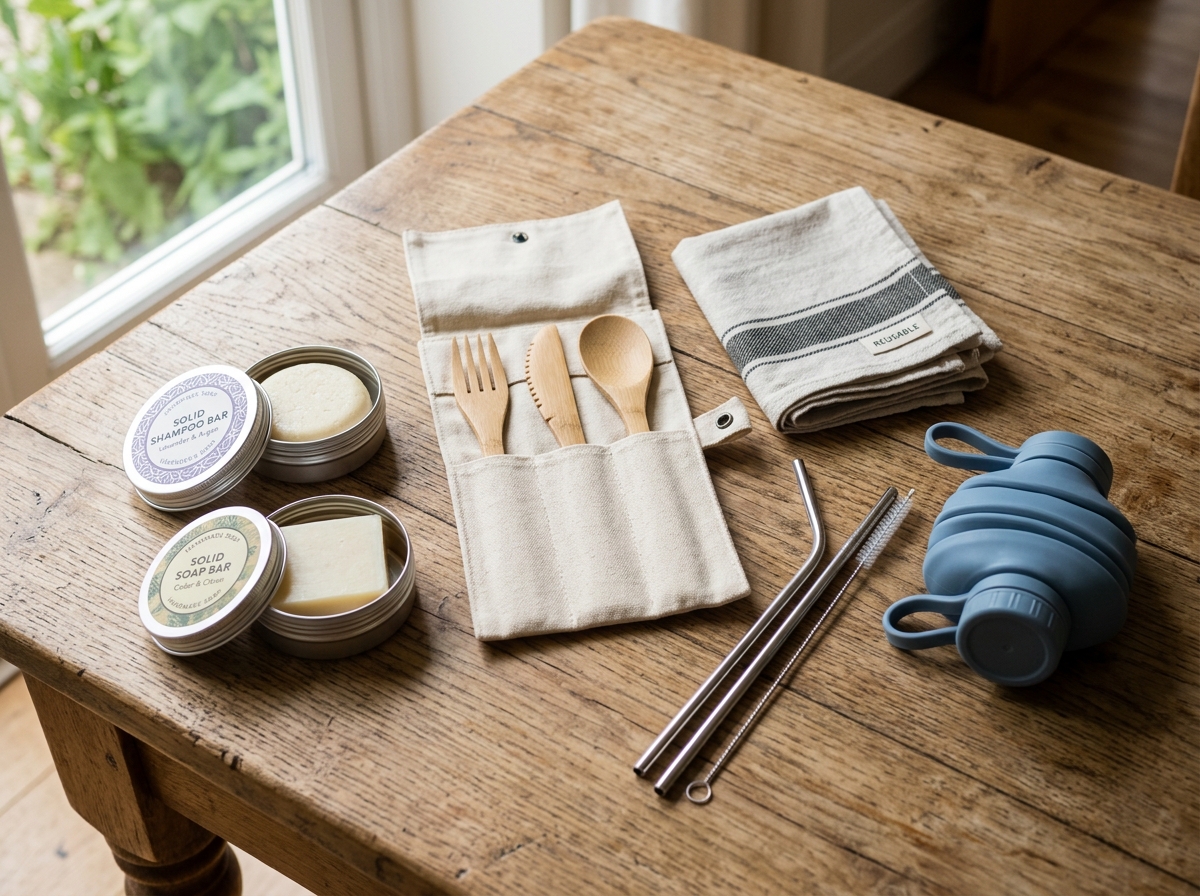
One of the most common myths is that zero waste is expensive. While there is an upfront investment in a “zero waste kit,” these items pay for themselves within a single trip.
Think about it: if you spend $30 on a high-quality filtered water bottle, but save $5 a day on bottled water over a 14-day trip, the bottle has already paid for itself—plus you’ve kept 28+ plastic bottles out of the ocean.
Financing Your Zero Waste Gear
You don’t need to buy everything new. In fact, the most sustainable item is the one that already exists.
- Thrifted Equipment: Look for high-quality camping gear or luggage at second-hand shops.
- Multi-use Items: A sarong can be a towel, a blanket, a scarf, or a laundry bag.
- Quality Over Quantity: It is better to buy one pair of $100 merino wool leggings that last five years than five pairs of $20 synthetic ones that smell after one wear.
For more tips on mindful spending, see our article on eco-friendly-shopping-habits.
Essential Low-Waste Toiletries for Budgeters
Standard toiletries are messy, heavy, and wasteful. Switching to solids is a game-changer for how-to-live-a-zero-waste-lifestyle on the road:
- Shampoo and Conditioner Bars: No plastic, no spills, and they pass through airport security easily.
- Toothpaste Tablets: Lightweight and packaged in compostable paper or glass.
- Safety Razors: A one-time investment where replacement blades cost pennies.
- Laundry Strips: Instead of buying plastic jugs of detergent at your destination, pack a few dry strips to wash clothes in a sink.
By making these simple-eco-friendly-swaps, you avoid the “convenience tax” of buying travel-sized plastic bottles at the airport.
Low-Impact Transit and Eco-Friendly Stays
Budget-Friendly Sustainable Accommodations
Where your money “sleeps” matters. Traditional hotels are resource-heavy, but sustainable alternatives are often cheaper:
- Eco-Lodges and Hostels: Many now use solar power and recycling systems. Look for LEED or Green Key certifications.
- Staying with Locals: Platforms that facilitate staying with residents not only save you money but also reduce the environmental footprint of a dedicated hotel room.
- WWOOFing: You can trade a few hours of work on an organic farm for free room and board.
- Glamping: Often provides an eco-luxury experience with a much lower carbon footprint than a standard resort.
The Financial Benefits of Slow Travel
Slow travel is the ultimate hack for zero waste travel budgeting. Instead of rushing through eight countries in two weeks (which requires expensive, high-emission flights), try staying in one “base city” for a month.
We’ve seen real-world examples where travelers spent only $3,000 for a multi-country trip spanning several months by using monthly public transit passes and weekly Airbnb discounts. Staying longer allows you to shop at local markets and cook your own meals, which can cut your food costs by 50-70%.
Mindful transit isn’t just for travel; you can apply these principles at home too, like slashing-utility-bills-with-mindful-eco-tips.
Dining and Activities: The Zero Waste Way
Food is often where travel budgets (and zero-waste goals) fall apart. In the U.S., 30-40% of food is wasted, and for travelers, that often looks like oversized restaurant portions or plastic-wrapped snacks.
Planning Your Food Budget to Minimize Waste
- Local Markets: Shopping at farmers’ markets is cheaper and supports the local economy. Plus, you can buy exactly the amount you need.
- Meal Prepping: Use silicone bags or beeswax wraps to pack snacks for transit days.
- The “Clean Plate Club”: Be mindful of portions. Ask for half-portions at restaurants, or share a large meal with a travel partner to avoid leftovers that will just be tossed.
- Bulk Snacks: Buy nuts, fruit, and crackers from bulk bins before you leave to avoid the high cost and high waste of airport vending machines.
For DIY ideas on keeping your food fresh without plastic, check out zero-waste-kitchen-hacks-that-you-can-diy.
Tracking Daily Expenses for Zero Waste Travel Budgeting
To stay on track, we recommend categorizing your daily spending. A typical day might include:
- Water Refills: Usually free at hostels or airports.
- Local Transport: Walking or biking is $0 and zero-waste!
- Low-Cost Activities: Hiking in national parks or taking free walking tours.
- Buffer: Always keep a 10-20% buffer in your budget for unexpected needs, like a sudden rainstorm requiring a bus ride instead of a walk.
Sustainable travel is a great way to teach sustainable-living-tips-for-families, showing kids that the best memories don’t come from gift shops.
Troubleshooting Your Zero Waste Travel Budgeting
Handling Places Without Zero Waste Infrastructure
Not every destination has a bulk store or safe tap water. In these cases, your health comes first. If you must buy bottled water, buy the largest jug available to minimize the plastic-to-water ratio. You can also carry a small pouch for recyclables to carry with you until you find a proper bin.
Avoiding Common Budgeting Mistakes
- The Perfectionism Trap: Don’t beat yourself up if you have to use a plastic straw once. Progress over perfection is the goal.
- Overpacking Reusables: Carrying a heavy glass jar “just in case” might lead to extra baggage fees. Stick to lightweight, collapsible silicone or titanium.
- Hidden Fees: Always check if your “eco-friendly” booking has hidden resort fees or if your budget airline charges $60 for a carry-on.
Frequently Asked Questions about Zero Waste Travel Budgeting
What if safe tap water isn’t available at my destination?
Always prioritize your health. If tap water isn’t safe, look for large 5-gallon refill stations often found in hostels or local shops. If you must buy bottles, choose the largest size possible. You can also invest in a UV-C light water purifier or a filter bottle like a Grayl to make tap water safe anywhere.
Can I bring my zero-waste cutlery kit on a flight?
Yes! Bamboo or plastic sets are always fine. If you have a metal set, the fork and spoon are usually okay, but we recommend leaving the knife at home or using a butter knife to avoid issues with security.
How do I find bulk stores or farmers markets in a foreign city?
Use apps like “Zero Waste Home” or “Bulk” (by Zero Waste App). Google Maps is also your friend—search for terms like “organic market,” “bio shop,” or “farmers market” in the local language.
Conclusion
At FinanceZenX, we believe that your financial freedom and the health of our planet are deeply connected. By mastering zero waste travel budgeting, you aren’t just saving money for your next adventure—you’re ensuring there is still a beautiful world left to explore.
Sustainable travel isn’t about restriction; it’s about liberation from the “convenience” cycle that drains our bank accounts and clutters our oceans. Whether you are staying in a local homestay or hiking through a national park, every low-waste choice you make is a vote for a better future.
Start your journey with our guide to sustainable living on a budget and see how easy it is to live—and travel—with intention.
