
Do Eco Friendly Stain Removers Actually Work?
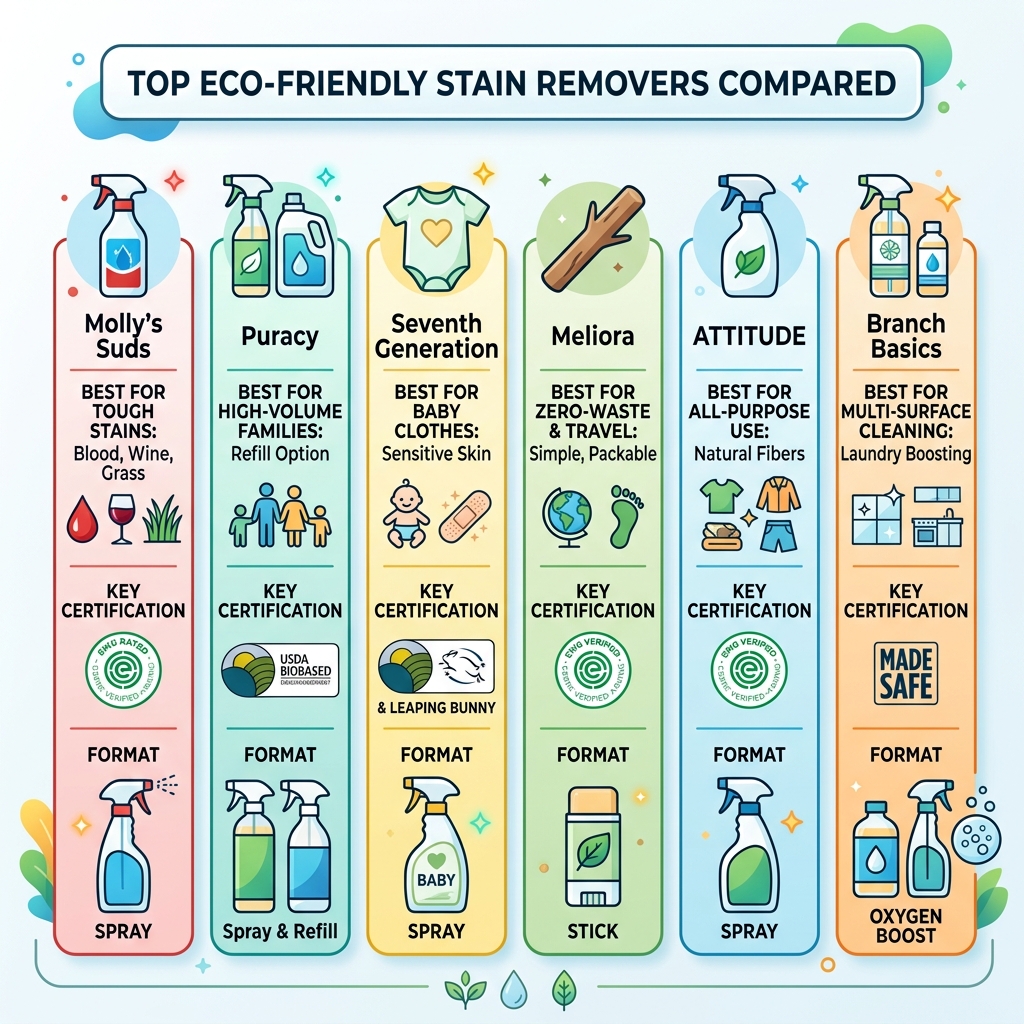
The short answer? Yes — but not all of them are equal. Here are the top picks to know about:
| Product | Best For | Key Cert |
|---|---|---|
| Molly’s Suds Spray | Tough stains (blood, wine, grass) | EWG rated |
| Puracy Stain Remover | High-volume families, refill option | USDA Biobased |
| Seventh Generation Free & Clear | Baby clothes, sensitive skin | USDA Biobased, Leaping Bunny |
| Meliora Stain Stick | Zero-waste, travel | EWG Verified (A rating) |
| ATTITUDE Stain Remover | All-purpose, natural fibers | EWG Verified |
| Branch Basics Oxygen Boost | Multi-surface, laundry boosting | MADE SAFE |
If you’ve ever stood in the laundry aisle squinting at ingredient labels, you already know the problem. Most conventional stain removers are packed with chemicals linked to skin irritation, hormone disruption, and aquatic toxicity. Chlorine bleach alone is one of the most common sources of poisoning reported to poison control centers.
So switching to an eco friendly stain remover makes sense — for your health and the planet.
But here’s the real concern most people have: will it actually get the stain out?
After all, nobody wants to choose the planet over their favorite shirt.
The good news is that modern plant-based and enzyme-powered formulas have closed the gap on conventional cleaners significantly. Products using blends of enzymes like protease, amylase, lipase, and pectinase can break down proteins, fats, starches, and plant-based stains at a molecular level — without the toxic trade-offs.
This guide compares the best options on the market right now, looks at what the certifications actually mean, and gives you DIY recipes if you’d rather skip the store entirely.
Why Conventional Stain Removers Are a Health Risk
When we look at the back of a standard, brightly colored bottle of stain remover, we often see a “black box” of ingredients. Many conventional brands rely on harsh chemistry to literally “blast” stains away, but that power comes at a cost to our indoor air quality and our skin.
Chlorine bleach is perhaps the most well-known offender. Beyond its ability to ruin a colored shirt with one accidental drop, its fumes are toxic and can be highly irritating to the respiratory system. But the “invisible” ingredients are often just as concerning.
Synthetic fragrances are a major red flag. These are often considered trade secrets, meaning companies don’t have to disclose the hundreds of individual chemicals—like phthalates—used to create that “fresh linen” scent. Phthalates are known endocrine disruptors that can interfere with hormonal health.
Then there are chemicals like 2-butoxyethanol, which has been linked to reproductive and developmental toxicity, and formaldehyde-releasing preservatives like Quaternium-15. Even common surfactants like SLES or phosphates can be problematic, contributing to aquatic toxicity when they wash down our drains and enter local waterways. For a deeper dive into how these choices affect your home, check out Clean slate: Choosing better stain removers for a healthier home.
The Science of Clean: How Plant-Based Formulas Work
If we aren’t using harsh bleach or petroleum-based solvents, how does an eco friendly stain remover actually lift that red wine or grass stain? The secret lies in “biotechnology”—specifically, plant-derived enzymes.
Think of enzymes as tiny biological “scissors.” Each type of enzyme is specialized to “cut” through a specific type of molecular bond:
- Protease: Breaks down protein-based stains like blood, grass, and baby formula.
- Amylase: Targets starches, such as chocolate, pasta sauce, or baby food.
- Lipase: Dissolves fats and oils, making it essential for grease or sweat stains.
- Mannanase & Pectinase: These tackle the “gummy” stains from food stabilizers and fruit residues (like that stubborn strawberry smudge).
Many top-tier products, such as those from Plant-Powered Laundry Stain Remover | Puracy, use a blend of six different enzymes to ensure they can handle a wide variety of “oops” moments.
Beyond enzymes, eco-friendly formulas often use oxygen bleach (sodium percarbonate). Unlike chlorine bleach, oxygen bleach breaks down into water and oxygen, making it much safer for the environment while still being incredibly effective at brightening whites and lifting organic pigments. These bio-based ingredients weaken the bond between the stain and the fabric, allowing biodegradable surfactants to pull the remnants into the water during the wash cycle.
Top-Rated Eco Friendly Stain Remover Products Put to the Test
Choosing the right product often depends on your specific household needs—whether you’re dealing with a toddler’s messy lunch or a professional wardrobe. We’ve looked at the data and real-world performance to see which ones truly stand out. If you’re looking for more general options, you might enjoy Uncovering the Best Eco-Friendly Cleaning Products.
The Best Eco Friendly Stain Remover for Baby Clothes
For parents, the priority is often finding a formula that is “Free & Clear”—meaning no dyes or fragrances that could irritate a baby’s delicate skin. Seventh Generation Natural Laundry Stain Remover is a standout here. It is a USDA Certified Biobased Product (97% renewable ingredients) and uses four plant-based enzymes to tackle spit-up and food messes.
ATTITUDE also offers an excellent unscented baby stain remover that is EWG Verified, meaning it meets the strictest standards for health and transparency. These products are designed to penetrate deeply into natural fibers without leaving behind irritating residues.
Zero-Waste Options: Stain Sticks vs. Sprays
If you’re moving toward a plastic-free laundry room, the Meliora Stain Removal Stick is a game-changer. In independent tests, this solid soap stick was a top performer for makeup stains, requiring surprisingly little scrubbing.
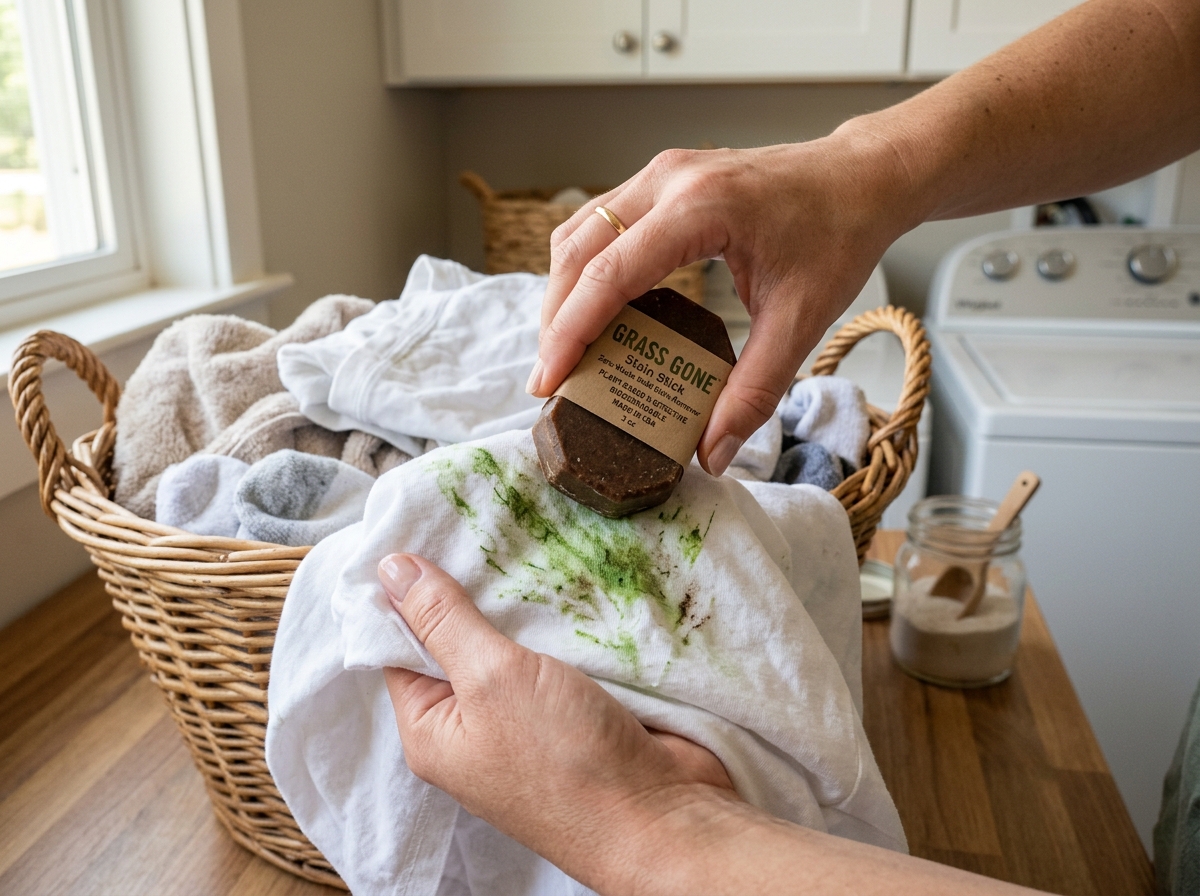
Stain sticks are highly concentrated and often come in simple paper wrapping, making them much more sustainable than plastic spray bottles. They are also incredibly travel-friendly—no worrying about leaks in your suitcase! While sprays are great for saturating large areas (like a wine spill), sticks are often more effective for targeted “elbow grease” tasks like collar stains or grass streaks.
High-Performance Enzyme Sprays for Tough Messes
When it comes to sheer popularity and performance, Molly’s Suds Stain Remover Spray holds a staggering 4.8 out of 5-star rating from hundreds of users. It’s often referred to as “Magic Water” because it manages to lift blood, wine, and grease using an unscented, enzyme-heavy formula.
Another heavyweight is Puracy, which boasts a 92% biobased content. One 16oz bottle can treat over 500 stains, making it a cost-effective choice for busy families. They also offer 48oz refill pouches, which significantly reduces plastic waste over time by allowing you to reuse your original spray bottle.
How to Use Your Eco Friendly Stain Remover for Maximum Results
Applying an eco friendly stain remover isn’t exactly the same as using a conventional “spray and forget” chemical. Because plant-based ingredients work biologically, they sometimes need a little more time and a specific technique to shine.
- Act Fast, But Rinse Cold: For protein stains like blood or grass, always rinse with cool water first. Hot water can “cook” the protein into the fibers, making it permanent.
The Rubbing Technique: After spraying or applying a stain stick, gently rub the fabric together or use a soft wooden laundry brush. This “activates” the enzymes and ensures they penetrate deep into the fibers.
Dwell Time is Key: Unlike harsh chemicals that might damage fabric if left too long, most eco-friendly removers benefit from sitting. For fresh stains, 15 minutes is usually enough. For set-in “mystery stains,” letting the product sit for 8 hours or even overnight (as recommended by Puracy) can work wonders.
- Check Before You Dry: Never put a stained item in the dryer until you’re sure the stain is gone. The high heat of the dryer will set the stain forever.
For more tips on integrating these habits into your routine, see our guide on Easy to Make Plant-Based Cleaners for the Home.
Budget-Friendly DIY Stain Removal Recipes
If you’re looking to save money while staying green, you probably already have a powerful eco friendly stain remover in your pantry. DIY options are incredibly cost-effective and eliminate the need for any plastic packaging.
A classic and highly effective “all-purpose” recipe involves:
- Hydrogen Peroxide: Acts as a natural oxygen bleach.
- Castile Soap (like Dr. Bronner’s): Provides the surfactant power to lift oils.
- Eucalyptus Oil: Excellent for cutting through grease and adding a natural, fresh scent.
You can find more detailed instructions in our article on Natural Cleaning Product Recipes for a Greener Home.
Is a DIY Eco Friendly Stain Remover Effective?
In many cases, yes! For grease stains, a simple mixture of baking soda and dish soap (or castile soap) can lift the oil out of the fabric effectively. Hydrogen peroxide is a superstar for organic stains like blood or wine. However, for very complex stains (like grass or certain inks), the laboratory-formulated enzyme blends in commercial products like Molly’s Suds or Puracy may outperform a simple DIY mix.
If you’re interested in revitalizing your laundry game further, check out Reviving Your Space with DIY Natural Cleaners.
Frequently Asked Questions about Sustainable Laundry
Do eco-friendly stain removers work on set-in stains?
Yes, but they require patience. For a stain that has already been through the wash, saturate it thoroughly with an enzyme-based remover (like Puracy or Molly’s Suds) and let it sit for at least 8 hours before washing again in cool water.
Are enzyme-based cleaners safe for wool and silk?
You should be cautious. Enzymes like protease are designed to break down proteins—and wool and silk are protein-based fibers. Always check the label. Some products, like Eco-Max, specifically advise against use on silk or wool. Always perform a patch test on an inconspicuous area first.
Can I use oxygen bleach with plant-based detergents?
Absolutely. In fact, many people use products like OxoBrite or Branch Basics Oxygen Boost as a laundry “booster” alongside their regular detergent to keep whites bright and help lift general grubbiness. Just avoid mixing enzyme-based removers with traditional chlorine bleach, as the bleach will “kill” the live enzymes and make the product useless.
Conclusion
At FinanceZenX, we believe that choosing an eco friendly stain remover is a perfect example of how small, sustainable choices can lead to a healthier home and a more circular economy. By opting for plant-based enzymes and bio-based ingredients, we protect our families from unnecessary chemical exposure and keep toxic residues out of our water systems.
Whether you choose a high-performance spray from a brand like Puracy, a zero-waste stick from Meliora, or a simple DIY recipe from your own kitchen, you don’t have to sacrifice effectiveness for your values. Sustainable living doesn’t have to “suck”—it just requires the right tools and a little bit of enzyme-powered science.
