
Is Investing in Solar Panels Actually Worth It?
Solar panel investment returns are one of the most searched topics for homeowners considering going green — and for good reason. Here’s the quick answer:
Average Solar Panel Investment Returns at a Glance
| Metric | Typical Range | US Average |
|---|---|---|
| Annual ROI | 8–20% | 10–15% |
| Payback Period | 6–16 years | 7–10 years |
| 25-Year Total Savings | $37,000–$148,000 | ~$57,000 |
| Home Value Increase | 4–7% | ~6.9% |
So yes — for most homeowners, solar panels deliver strong, predictable returns that rival or beat the stock market.
But the exact numbers depend heavily on where you live, what you pay for electricity, and how you finance the system.
The story is compelling. Solar panel costs have dropped roughly 50% since 2010, while electricity rates keep climbing about 2–3% every year. That gap is where your returns come from.
And unlike stocks, your solar “gains” are tax-free savings — not taxable income. Every dollar you don’t pay to your utility company stays in your pocket.
Whether you’re driven by a desire to shrink your carbon footprint, cut your monthly bills, or build long-term financial resilience, understanding the real numbers behind solar is the smartest first step you can take.

Defining solar panel investment returns: ROI vs. Payback Period
When we talk about the money side of solar, we often hear two terms tossed around like frisbees at a park: Return on Investment (ROI) and Payback Period. While they’re related, they tell us very different things about our financial health.
ROI (Return on Investment) is the big-picture percentage. It measures the total profit we make over the life of the system (usually 25 to 30 years) relative to what we paid upfront. Think of it like a high-yield savings account or a stock. If our solar ROI is 15%, that’s essentially the “annual interest rate” we’re earning by not giving that money to the electric company.
Payback Period, on the other hand, is the “break-even” point. It’s the number of years it takes for our cumulative electricity bill savings to equal the net cost of the system. If we spend $15,000 on panels and they save us $1,500 a year, our payback period is 10 years. After that 10th year, every cent saved is pure, sun-drenched profit.
For a deeper dive into these metrics, check out our FinanceZenX Solar Panel ROI Guide.
Average Payback Periods Across the US
In our experience at FinanceZenX, the “magic number” for most American homeowners is 7 to 10 years. That is the national average for a residential solar system to pay for itself. However, this isn’t a hard rule. In states with sky-high utility rates like Massachusetts or Hawaii, we’ve seen payback periods as short as 5 years. Conversely, in states with very cheap coal-powered electricity and fewer incentives, it might stretch to 12 or 15 years.
The two biggest levers here are your local utility rates and the total installation costs. If your utility charges $0.25 per kilowatt-hour (kWh), your panels are twice as “valuable” as they would be in a town charging $0.12 per kWh.
Comparing solar panel investment returns to Stocks and Savings
We often get asked: “Should I put $20,000 into the S&P 500 or onto my roof?” It’s a great question. Historically, the stock market returns about 8–10% annually. Solar panel investment returns typically range from 10% to 20%.
But here is the “Zen” kicker: solar returns are low-risk and tax-free. If you make $2,000 in the stock market, Uncle Sam wants his cut of capital gains. If you save $2,000 on your electric bill, that’s $2,000 of “invisible income” that is 100% yours. Furthermore, solar acts as an inflation hedge. As utility companies hike rates (averaging 2.5% to 5% annually), your “dividend” from the sun actually increases. You can’t say that about a standard savings account!
Step-by-Step: Calculating Your Solar Financials
Calculating your potential returns doesn’t require a PhD in mathematics, but it does require a sharp pencil and your last 12 months of electric bills. We like to look at the “Net System Cost” first.
The Basic Formula:
- Gross Cost: Total price for equipment, labor, and permits.
- Minus Incentives: Subtract the 30% Federal Tax Credit and any state rebates.
- Equals Net Cost: This is your actual out-of-pocket investment.
To see how this plays out based on how you pay, look at this comparison:
| Feature | Cash Purchase | Solar Loan (5-7%) |
|---|---|---|
| Upfront Cost | High ($15k – $25k) | Low to Zero |
| Annual Savings | Max (No interest) | Moderate (Minus loan payment) |
| Total 25-Year ROI | Highest | Lower (Due to interest) |
| Payback Period | 7–9 Years | Immediate Positive Cash Flow* |
| Ownership | You own it Day 1 | You own it (with a lien) |
*Many solar loans are structured so the monthly payment is lower than your previous electric bill, creating “instant” ROI.
For a personalized estimate, use our FinanceZenX Solar ROI Calculator to see your 2026 projections.
The Impact of Incentives and Net Metering
The federal government’s Residential Clean Energy Credit (ITC) is the heavyweight champion of solar incentives. Currently, it allows us to deduct 30% of the total system cost from our federal income taxes. If a system costs $20,000, that’s a $6,000 straight-up discount.
Then there’s Net Metering. This is a billing arrangement where your utility company buys the excess energy your panels produce during the day (when you’re at work) and gives you credit to use at night. In “Retail Rate” states, they credit you 1-to-1. This effectively turns the power grid into a giant, free battery for your home. More info about sun-powered living can help you understand how these devices integrate into a wider sustainable lifestyle.
Residential vs. Commercial Solar Returns
Businesses often see even better solar panel investment returns than homeowners. The average ROI for commercial solar is roughly 15.87%, with some high-performing states like Virginia hitting over 21%.
Why the boost? Businesses benefit from MACRS Depreciation, allowing them to write off the value of the solar equipment quickly, significantly reducing their tax liability in the first few years. Additionally, rural businesses and farms can tap into USDA REAP grants, which can cover up to 50% of the total project cost. When you combine a 30% tax credit, a 50% grant, and depreciation, the “payback” can sometimes happen in under 5 years.
Variables That Shape solar panel investment returns
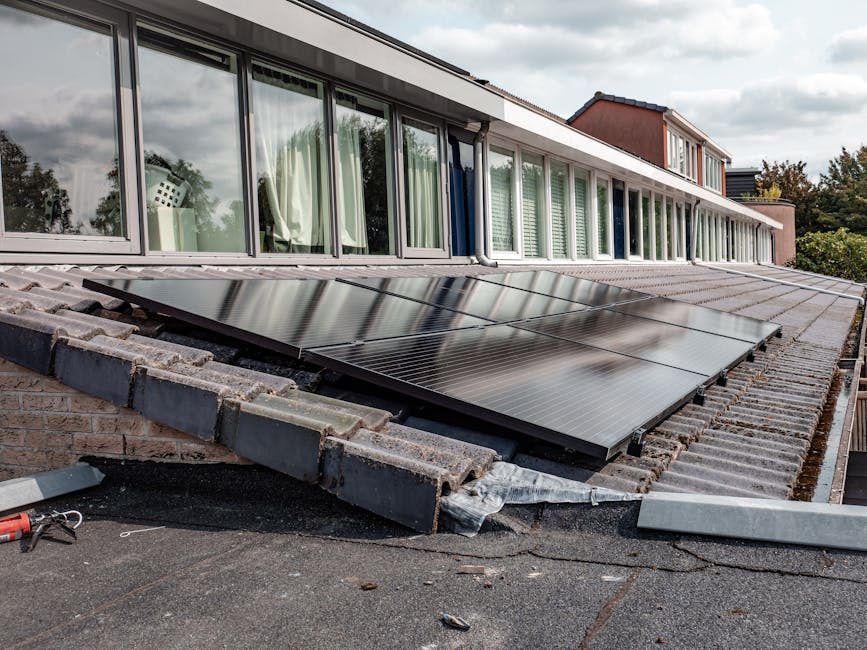
Not every roof is created equal. Several environmental and technical factors will dictate whether your investment is a “home run” or just a “base hit.”
- Solar Irradiance & Peak Sun Hours: A 10kW system in Arizona will produce significantly more electricity than the exact same system in Seattle. We measure this in “peak sun hours.” The Southwest enjoys 6+ hours, while the Northeast might average 3.5 to 4.
- Electricity Rate Hikes: This is the “hidden” fuel of solar ROI. If your utility raises rates by 5% next year, your panels just became 5% more profitable.
- Panel Degradation: Solar panels aren’t immortal. They typically lose about 0.5% of their efficiency per year. Most high-quality panels are guaranteed to produce at least 85-90% of their original power after 25 years. We factor this “slow fade” into all our long-term wealth projections.
If you’re wondering if your specific roof qualifies, see our FinanceZenX Guide: Are Solar Panels Worth It?.
Regional Breakdown: Southwest vs. Northeast
It’s a tale of two regions. In the Southwest (CA, AZ, NV), ROI is driven by sheer sunshine. Payback periods are often 5–8 years because the panels are constantly gorging on photons.
In the Northeast (MA, NY, NJ), the sun is a bit shyer, but the solar panel investment returns are often just as high. Why? Because electricity prices in places like Boston or New York City are among the highest in the country, and state-level incentives (like SRECs or SMART programs) add extra cash to your pocket every month. It’s a reminder that you don’t need to live in a desert to make solar a brilliant financial move.
System Design and Equipment Quality
We always tell our readers: don’t cheap out on the heart of your system.
- Orientation: A south-facing roof is the gold standard. Southeast and southwest are also great (85-95% efficiency). North-facing roofs? Usually a bad investment.
- Equipment: Premium panels might cost 15% more upfront, but if they produce 10% more energy and last 10 years longer, the long-term ROI is vastly superior.
- Shading: Even a small chimney shadow can knock out a significant portion of a string inverter’s production. Using micro-inverters or power optimizers can mitigate this, protecting your returns.
Advanced Strategies to Boost Your Returns
If you want to move from “standard” returns to “elite” returns, you need to think about energy management, not just energy production.
Maximizing Efficiency and Longevity
The best way to increase your solar ROI is to use less power in the first place. At FinanceZenX, we promote a “Reduce then Produce” philosophy. By upgrading to LED lighting and installing a smart thermostat, you can shrink your home’s “energy footprint.” This allows you to install a smaller, cheaper solar system that still covers 100% of your needs, effectively shortening your payback period.
Regular monitoring is also key. Most modern systems come with an app. We recommend checking it once a month. If one panel is underperforming due to a layer of bird “presents” or a loose wire, catching it early saves you money.
The Power of Battery Storage
Adding a battery like a Tesla Powerwall or an EcoFlow Power Kit changes the math. While it increases the upfront cost (averaging $10,000 – $15,000), it can be essential for ROI in areas with Time-of-Use (TOU) rates.
In TOU markets, electricity might cost $0.15 in the morning but jump to $0.45 in the evening. A battery allows you to store your “cheap” solar power from the afternoon and use it during those “expensive” evening hours. This “peak shaving” can significantly accelerate your savings, especially as more utilities move away from traditional net metering.
Common Mistakes to Avoid
We’ve seen well-intentioned homeowners tank their ROI with a few common blunders:
- Over-sizing the system: In many states, utilities won’t pay you full price for “extra” power. If you build a system that produces 120% of what you need, that extra 20% might have a 20-year payback period. Aim for 95-100% coverage.
- Ignoring the roof: If your roof needs replacing in 3 years, do it before the panels go up. Removing and reinstalling panels costs thousands and resets your ROI clock.
- High-interest financing: A 10% interest rate on a solar loan can eat up nearly all your monthly savings. Always shop for “green loans” or look into HELOC options.
Frequently Asked Questions about Solar Returns
What is a good solar ROI percentage?
We consider anything above 8–10% to be a “good” ROI, as it matches or beats the historical average of the stock market. However, many of our readers achieve 12–15% in the current market. If you’re hitting 20%, you’re in the “Solar Hall of Fame.”
How does battery storage affect my payback period?
Typically, a battery lengthens the payback period by 2 to 4 years because of the high upfront cost. However, it increases your energy independence and protects you against blackouts. If your utility doesn’t offer 1-to-1 net metering, a battery might actually be necessary to see any significant ROI at all.
When does solar not make financial sense?
Solar is a great tool, but it’s not a magic wand. It might not make sense if:
- Your monthly electric bill is under $75 (the system takes too long to pay for itself).
- Your roof is heavily shaded by protected trees or skyscrapers.
- You plan on moving in the next 2 or 3 years.
- Your local utility has extremely low rates (under $0.08/kWh) and no net metering.
Conclusion
At FinanceZenX, we believe that solar panel investment returns represent more than just numbers on a spreadsheet. They represent a shift toward financial freedom and a sustainable lifestyle. By turning your roof into a power plant, you are essentially “pre-paying” for 25 years of electricity at a massive discount, all while protecting the planet for future generations.
The window to maximize these returns is wide open, especially with the 30% federal tax credit currently locked in. Whether you choose a simple cash purchase or a clever financing path, the sun is ready to start paying your bills.
Ready to integrate more eco-friendly choices into your financial plan? Start your sustainable journey with our latest guides on green living and wealth building.
