
Identifying Common Waste and the Plastic Free Kitchen Budget
When we first look at our kitchens, the sheer volume of plastic can be overwhelming. From the thin film on a cucumber to the massive stack of Tupperware in the “chaos cabinet,” it feels like plastic is the default setting for modern life. At FinanceZenX, we believe the first step to a plastic free kitchen budget isn’t spending money—it’s observation.
The most common sources of waste in a typical kitchen include single-use produce bags, cling film (plastic wrap), zippered sandwich bags, plastic sponges, and the ubiquitous plastic-lined paper coffee filters. Beyond the environmental toll, these items represent a constant leak in your monthly budget. You buy them, use them once, and throw them away—along with the money you spent on them.

Conducting a “bin audit” is a powerful, free way to start. For one week, simply take note of what you are throwing away. Are you tossing out three plastic produce bags every grocery trip? Are you going through a roll of paper towels every four days? By identifying your most frequent disposables, you can prioritize swaps that offer the highest return on investment.
Reducing plastic isn’t just about the planet; it’s about your health. Many kitchen plastics contain BPA or phthalates, which can leach into food, especially when heated. Furthermore, plastic cutting boards release microplastics with every knife stroke, and non-stick Teflon pans can release toxic fumes at high temperatures. Switching to inert materials like glass, stainless steel, and wood creates a safer environment for your family. For more foundational tips, check out how to reduce plastic use at home.
Why Reducing Plastic is a Win for Your Wallet
The “eco-friendly” label often comes with a premium price tag, but that is a marketing myth we want to bust. A plastic free kitchen budget is actually a strategy for long-term financial wellness. While a roll of paper towels costs only a few dollars, the cumulative cost of 80 rolls a year (the average per person) is significant.
Consider the “Payback Period.” If you spend $20 on a set of high-quality cloth napkins, and those napkins replace $100 worth of paper towels over the next year, the napkins pay for themselves in less than three months. After that, you are essentially “earning” $100 a year by not buying disposables.
| Item | Annual Cost (Disposable) | Cost of Reusable Swap | 5-Year Savings |
|---|---|---|---|
| Paper Towels | $120.00 | $20.00 (Cloth Rags) | $580.00 |
| Plastic Wrap | $30.00 | $15.00 (Beeswax Wraps) | $135.00 |
| Sandwich Bags | $45.00 | $25.00 (Silicone Bags) | $200.00 |
| Coffee Filters | $25.00 | $15.00 (Metal Filter) | $110.00 |
| Total | $220.00 | $75.00 | $1,025.00 |

The Environmental Impact of Kitchen Disposables
The statistics are sobering. In the U.S. alone, we use approximately 500 million drinking straws daily. Globally, 160,000 plastic bags are produced every single second. Most of this plastic is not recyclable; only about 9% of all plastic ever made has been recycled. The rest ends up in landfills, where it can take 1,000 years to decompose, or in our oceans, where it breaks down into microplastics that enter the food chain.
Furthermore, food waste is a hidden climate killer. If food waste were a country, it would be the third-largest contributor of greenhouse gases. Plastic-free swaps often encourage us to buy fresh, whole foods and store them in clear glass jars, which makes us more likely to see and use what we have, naturally reducing food waste.
Low-Cost Swaps for Cleaning and Food Prep
Cleaning is one of the easiest areas to tackle on a plastic free kitchen budget. Most commercial cleaning wipes and sponges are made of synthetic plastics that shed microplastics into the water system.
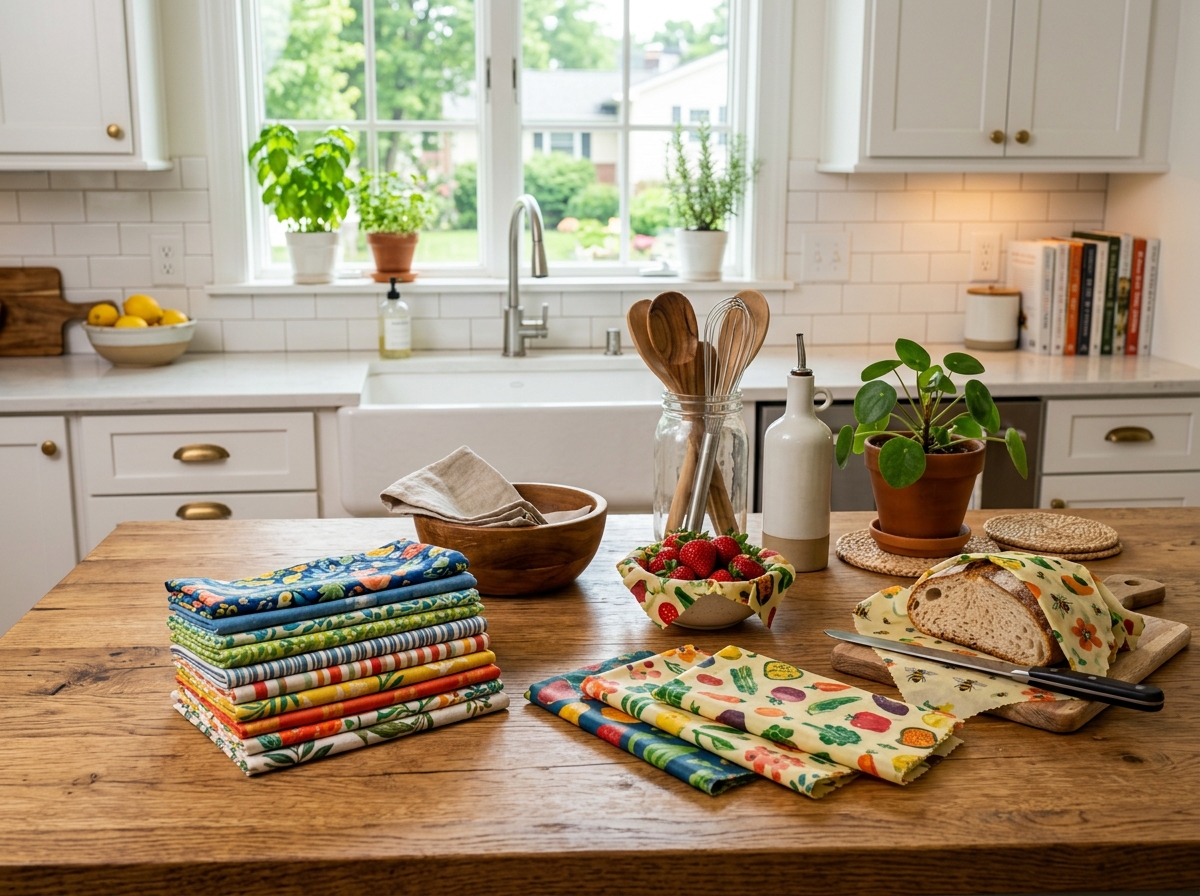
Cloth Napkins and Rags: You don’t need to buy “un-paper towels.” Old t-shirts, flannel sheets, or even worn-out bath towels can be cut into squares. Keep a basket for clean rags and a small bin under the sink for dirty ones. Wash them with your regular towel load. Swedish Dishcloths: These are a brilliant hybrid between a sponge and a cloth. They can absorb 20 times their weight in liquid, are made of natural wood pulp and cotton, and can be composted at the end of their life (usually after 6–12 months of use). Beeswax Wraps: Instead of struggling with cling film that never sticks to the bowl but always sticks to itself, try beeswax wraps. They use the warmth of your hands to mold around jars or fruit. They are washable in cool water and last for about a year. Silicone Baking Mats: If you bake often, stop buying parchment paper or greasing pans with plastic-bottled sprays. A silicone mat provides a non-stick surface that lasts for thousands of uses. For more DIY inspiration, explore zero waste kitchen hacks that you can diy.
Maximizing Your Plastic Free Kitchen Budget with DIY Solutions
The most sustainable item is the one you already own. Before you head to an eco-boutique, look in your recycling bin.
- The Mighty Mason Jar: Glass jars from pasta sauce, pickles, or jam are the gold standard of a plastic free kitchen budget. Once cleaned, they are perfect for pantry storage, leftovers, or even as drinking glasses.
- DIY Cleaning Solutions: You can replace almost every plastic-bottled cleaner with two ingredients: white vinegar and baking soda. A 50/50 mix of vinegar and water in a glass spray bottle works on windows, counters, and floors. Baking soda acts as a gentle abrasive for tough stains.
- T-Shirt Produce Bags: If you have basic sewing skills (or even just a pair of scissors), you can turn old cotton shirts into breathable produce bags. This prevents the need for those flimsy plastic rolls at the grocery store. Learn more in our guide to making reusable household items.
Affordable Alternatives to Coffee Filters and Straws
Coffee is a daily ritual that can generate a lot of waste. If you use a standard drip machine, the filters and the coffee grounds usually end up in the trash.
- French Press: This is a completely plastic-free way to brew coffee. It uses a metal mesh filter, so there is zero waste other than the grounds (which should go in your compost!).
- Organic Cotton Filters: If you prefer the taste of filtered coffee, you can buy reusable cloth filters for about $13 for a pack of two. Just rinse them after use and boil them once a month to deep clean.
- Straws: While the best budget option is to simply drink from the rim of the glass, some people (especially kids) prefer straws. Stainless steel straws are durable and easy to clean with a small brush, while silicone straws are softer and better for smoothies. Check out our top picks for reusable home products for more ideas.
Sustainable Food Storage, Cookware, and Shopping
Food storage is where plastic usually dominates. Tupperware sales topped $1.3 million in 2022, showing just how much we rely on these containers. However, as plastic ages, it becomes brittle and can leach chemicals.
Stainless Steel and Glass: These materials are inert, meaning they won’t react with acidic foods like tomato sauce. They are also microwave and dishwasher safe (in the case of glass). Cast Iron: A well-seasoned cast iron skillet can replace several non-stick pans. It lasts a lifetime—literally—and actually adds a small amount of beneficial iron to your diet. It’s a one-time purchase that fits perfectly into a plastic free kitchen budget. Wooden Utensils and Bamboo Boards: Plastic cutting boards are notorious for harboring bacteria in the deep grooves made by knives. Natural wood and bamboo have inherent anti-bacterial properties. Plus, they don’t shed microplastics into your dinner. For a deeper dive, see our biodegradable kitchen tools a review.
Smart Grocery Habits for a Plastic Free Kitchen Budget
How you shop determines how much plastic enters your home. To keep your plastic free kitchen budget on track, try these strategies:
- Bulk Bins: Buying from bulk bins allows you to get exactly the amount you need, reducing food waste. Bring your own jars or cotton bags. (Just remember to “tare” or weigh your empty container first!).
- Farmers Markets: Produce at farmers markets is rarely wrapped in plastic. You can buy “loose” carrots, spinach, and berries and put them directly into your own basket.
- The “Floor is Lava” Game: Treat plastic packaging like lava. Try to navigate the grocery store by only picking up items that are “naked” or packaged in glass, metal, or paper. This often leads you to healthier, whole-food options that are cheaper per pound than processed, packaged snacks.
- Apps for Savings: Use apps like Too Good To Go or Olio to rescue food from local businesses that would otherwise be thrown away. This is a great way to get high-quality bread or produce for a fraction of the price. If you’re making your own bags, see simple ideas to make diy reusable bags at home.
For a review of the best bags on the market, check out making the switch reusable shopping bags reviewed.
Non-Toxic Materials for Cookware and Utensils
When it’s time to replace a worn-out pan or melted plastic spatula, prioritize materials that last.
- Enameled Cast Iron: Excellent for Dutch ovens and slow-cooking. It provides the heat retention of cast iron with a smooth, easy-to-clean surface.
- Stainless Steel: Look for “18/10” stainless steel for the best durability and corrosion resistance.
- Maintenance is Key: To make your plastic free kitchen budget stretch further, take care of your tools. Season your cast iron, oil your wooden cutting boards with food-grade mineral oil, and avoid using metal scrubbers on glass to prevent scratches.
Frequently Asked Questions about Plastic-Free Kitchens
How do I start a plastic-free kitchen with zero dollars?
Start with a “bin audit” to see what you use most. Then, stop buying disposables. Use old rags instead of paper towels, and wash and reuse the glass jars you already have from store-bought sauces. Repurpose old t-shirts into produce bags. The most sustainable kitchen is the one where you stop bringing new plastic in.
What are the best budget alternatives to plastic wrap?
The cheapest alternative is a plate! Simply place a plate over a bowl of leftovers in the fridge. You can also use “inverted jars”—place a half-cut onion or lemon face down on a small saucer. If you need a flexible cover, beeswax wraps are a great investment, or you can use a clean kitchen towel secured with a rubber band.
How do I clean and maintain reusable silicone bags?
Silicone bags are very durable but can hold onto smells if not cleaned properly. Most are dishwasher safe; just flip them upside down over the prongs of the top rack. For hand-washing, use warm soapy water and a bottle brush to get into the corners. To remove odors, soak the bag in a mixture of baking soda and water, or “bake” the empty bag in the oven at a low temperature (around 350°F/175°C) for 20 minutes.
Conclusion
At FinanceZenX, we believe that every dollar you save by ditching disposables is a dollar that can go toward your future financial freedom. A plastic free kitchen budget isn’t about buying a Pinterest-perfect set of matching glass canisters; it’s about mindful consumption and choosing quality over convenience.
By making small, intentional swaps—like choosing cloth napkins over paper or bulk bins over plastic bags—you are taking a stand for your health, your wallet, and the planet. Start with one change this week. Whether it’s sewing a bag from an old shirt or finally trying a French press, every step counts. For more tips on living well without spending a fortune, read our guide on sustainable living on a budget. Together, we can wrap up the era of plastic waste and build a more sustainable, financially secure home.
